A couple of months ago, I walked past a cage near my block. Two crows were inside. One was still trying to find a way out, pushing against the wire, searching for a gap. The other had stopped moving. It was just standing there, still, as if it had already accepted what was coming.
I don’t think I’ve been able to shake that image since. And the more I sat with it, the more I realised it wasn’t really about crows. It was about how easily we’ve made peace with culling animals the moment they become inconvenient to us, and how rarely we stop to ask why it was ever “inconvenient” in the first place. An episode of Ultraman Teo was what finally made me want to write it out.
Raised, Then Left Behind
In episode 7 of Ultraman Teo, we learn that the kaiju Vermilios wasn’t attacking out of malice. It was looking for its mother, Professor Kazoku Eto, who had raised it from an egg. She kept it, cared for it, watched it grow, right up until it grew too big for her to manage, and then she left it behind.
Sit with that for a second. Vermilios didn’t choose to be raised by a human. It didn’t choose to grow into something too large, too much, too inconvenient. All it did was exist the way it was always going to exist. The abandonment wasn’t its failure. It was hers. And yet Vermilios is the one left alone, confused, lashing out at a world it no longer understands.
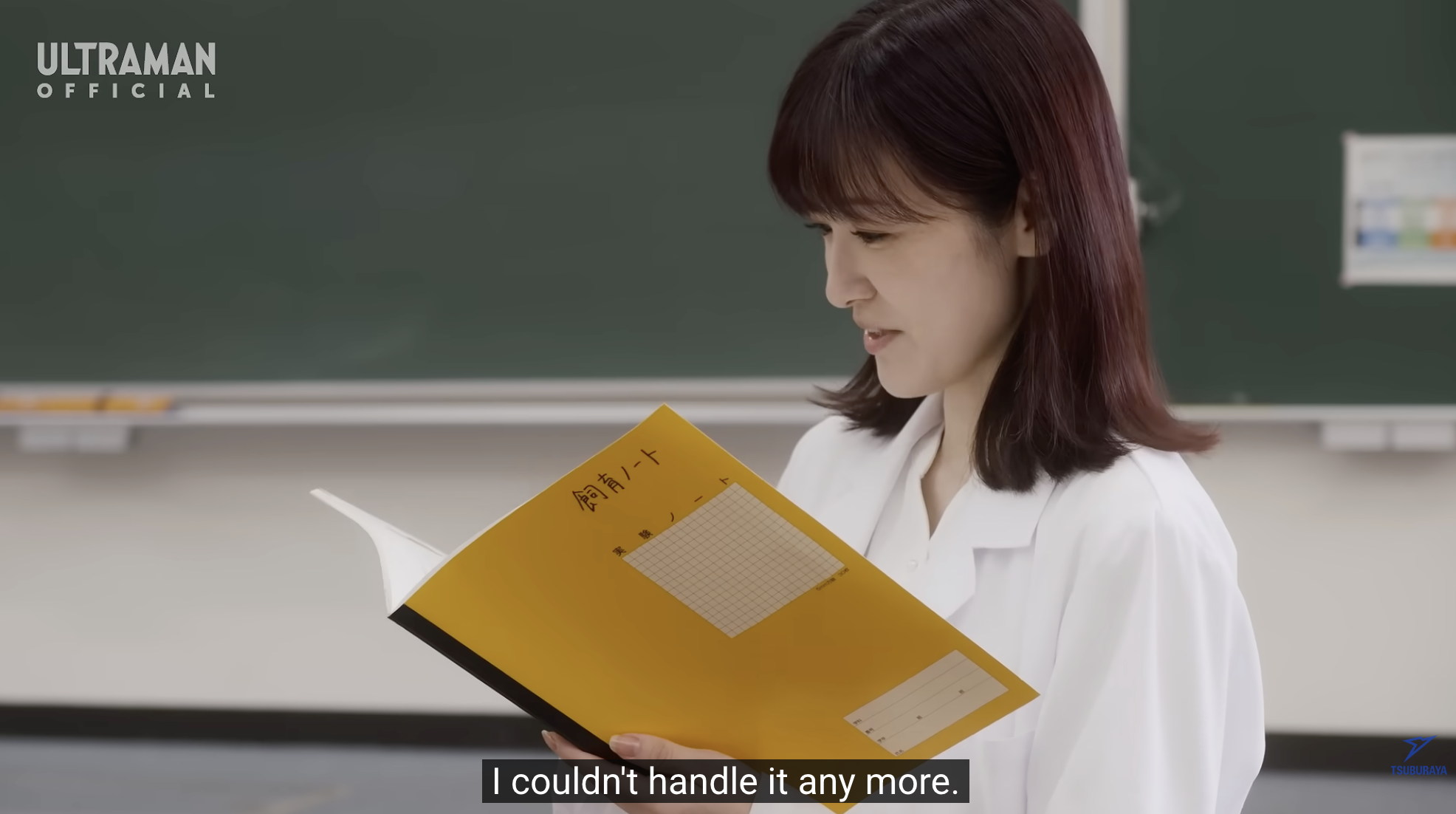
It’s not so different from what happens with pets who get given up the moment they’re no longer small, no longer easy, no longer convenient. The animal didn’t change the terms of the relationship. We did.
Afraid of What We Don’t Understand
The same episode gives us Emma, who spends much of it afraid of Pucchi after discovering it can transform into a kaiju. By the end, she arrives at something quietly important: we’re usually only afraid of what we don’t know, or don’t understand.
That line has stuck with me more than I expected. Because so much of how we treat animals around us, otters, crows, pigeons, strays, isn’t actually a response to danger. It’s a response to unfamiliarity that we’ve mistaken for danger. Something behaves in a way we don’t understand, and instead of asking why, we decide it’s a threat and move to remove it.
Except this isn’t even a new idea. Ultraman has been saying some version of this since the very beginning. So why does it still feel like nobody remembers it? How many of us actually take it as a call to action, or even just a moment to reflect, rather than a nice line from a kids’ show that gets forgotten by the next episode?
That’s what this episode of Teo did for me. It didn’t just make me think about Emma and Pucchi. It sent me straight back to an episode of Ultraman Gaia I hadn’t thought about in years.
Destroyers of Planets
This is where Ultraman Gaia says something I think about a lot. In episode 44, GUARD prepares to fire a planet-destroying missile at a world inhabited by two kaiju species, COV and Pazuzu. Gamu pushes back, not because the kaiju are harmless, but because of what firing that missile would actually mean. If this is the answer every time, he argues, the Kongenteki Hametsu Shoraitai will just move on to another planet, provoke the same fear, and we’ll fire another missile. And another. Until we’ve become a species that destroys planets simply because we don’t know how to do anything else.
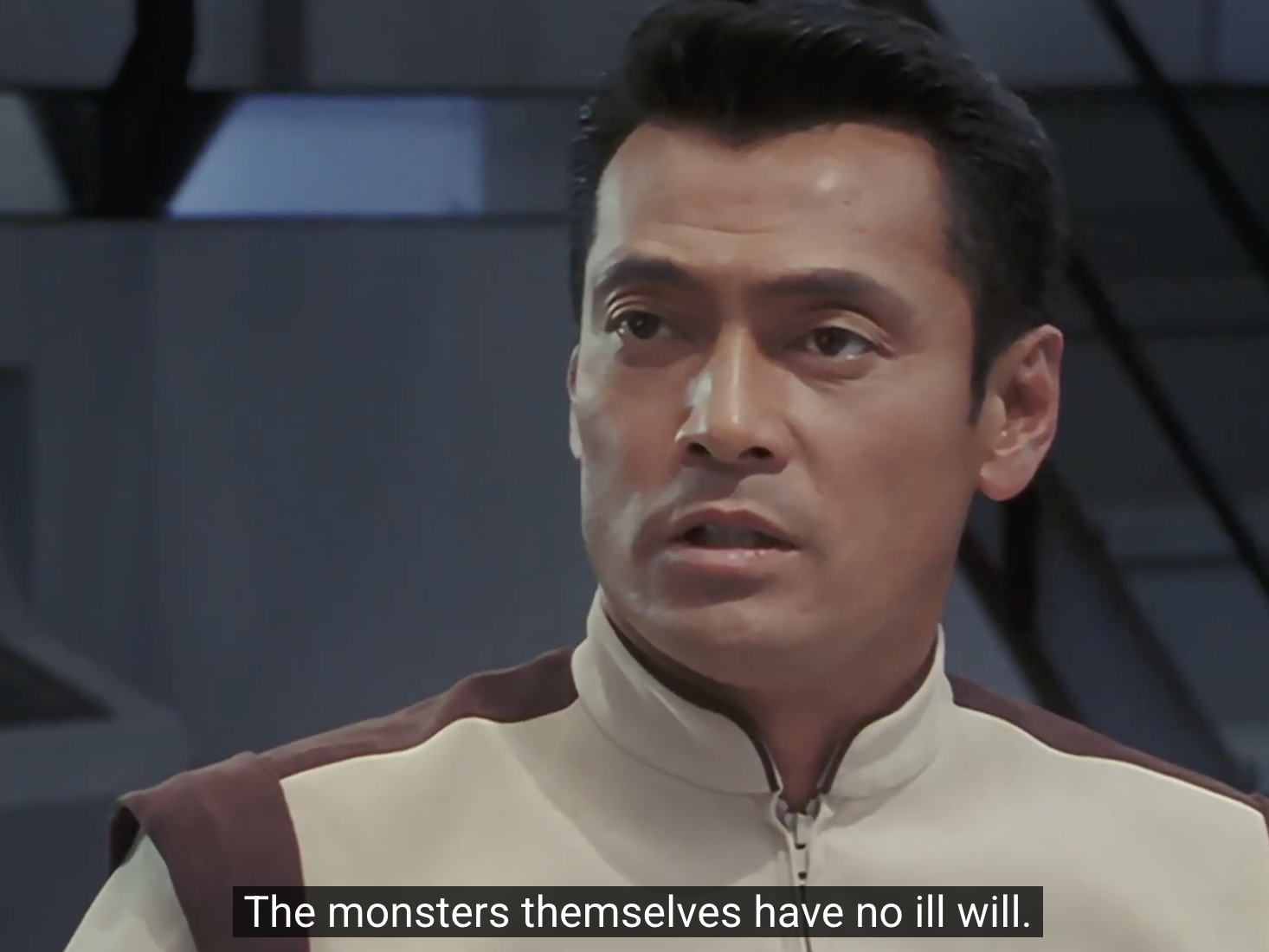
Gamu also makes a simpler point earlier in his reasoning: these kaiju attack because they’re somewhere unfamiliar to them. Not out of cruelty. Not out of hatred. They’re disoriented, displaced, and reacting the only way they know how.
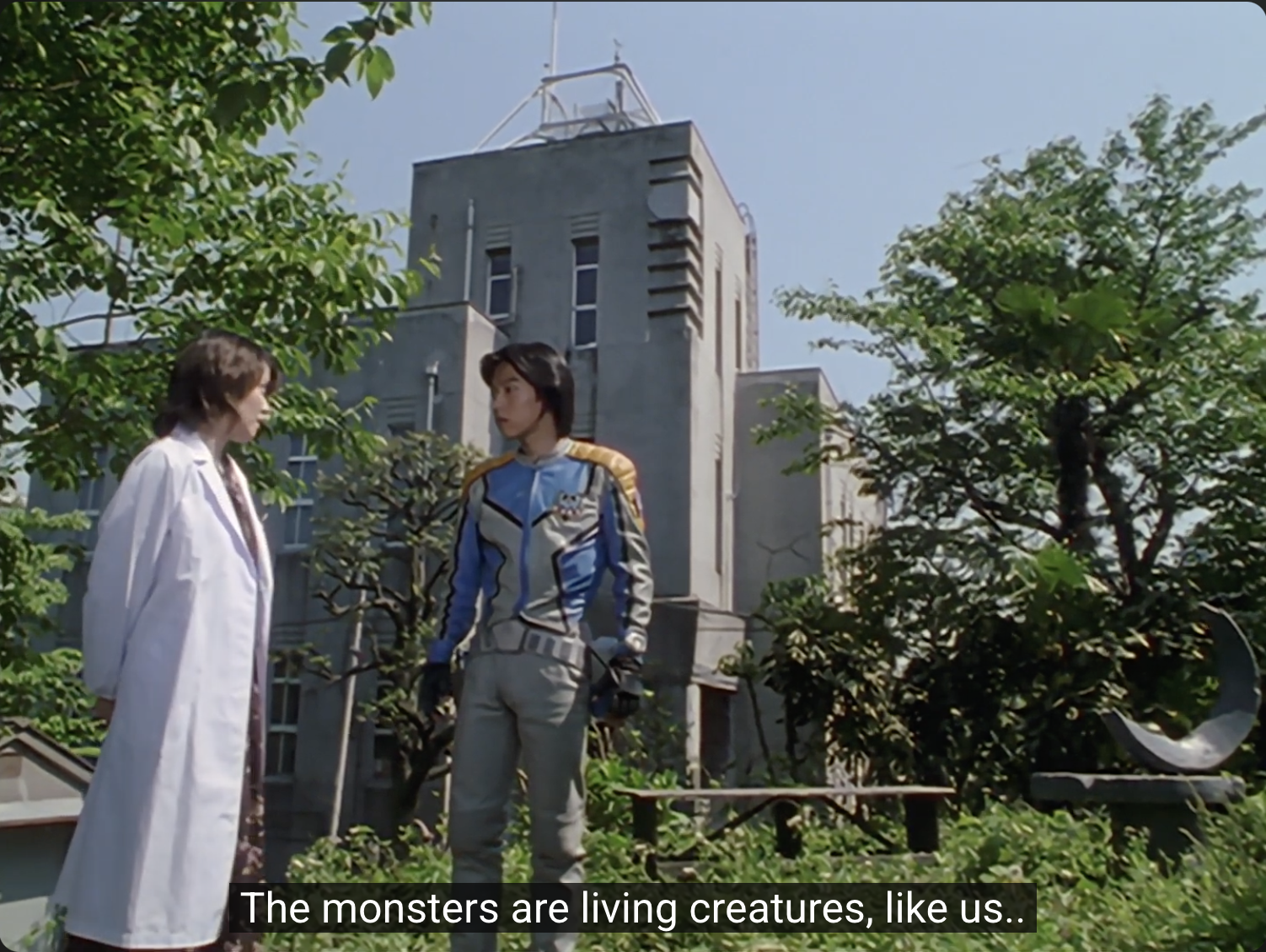
I think about that a lot when I think about otters.
The Questions We Never Ask
Singapore’s otters have made a real comeback in recent years, and it’s genuinely something to be proud of. But that comeback has also brought otters into contact with landed properties that have had koi ponds for far longer than the otters have been back in the picture. And when an otter eats an expensive fish, the response on social media is often the same: cull them.
Here’s what bothers me about that. The return of otters to our waterways hasn’t been a secret. It’s been reported on, celebrated even. Anyone keeping fish in an open pond has had years to know this was a possibility, and years to put up a fence or a net. Yet when the fish are eaten, it’s the otter that’s blamed, not the absence of a fence.
The same pattern shows up with crows and pigeons, just with harsher consequences. No otters have been culled in Singapore, but crows and pigeons haven’t been as fortunate. Crows are culled after unexplained attacks, but no one really asks why the crow attacked in the first place. What changed near its nest? What provoked it? Pigeons are culled because their droppings are said to be “poisonous,” but that’s rarely questioned either. Is that simply what a pigeon is, or is it partly a consequence of what we’ve left them to feed on in an urban environment we built?
We never ask these questions. We just remove the animal, and move on, as if the question died with it. Culling animals ends the inconvenience. It never ends the reason for it.
We caused the change. Then we called them the intruders.
This is the part that sits heaviest with me. Humans have spent decades reshaping this planet, clearing land, filling in waterways, building over habitats, leaving animals with fewer and fewer places to go. And when they end up near us, in the spaces we’ve taken over, we don’t see it as our doing. We see it as theirs. As if they chose to invade, rather than being left with nowhere else.
We caused the collision. Then we wrote the story so that they’re the ones at fault for it.
This is also, oddly enough, the exact plot of Ultraseven Evolution. Its overarching story reveals that humans were never the rightful owners of Earth to begin with. We were the invaders, the ones who wiped out the native lifeforms here long before we ever called this planet home. And Ultraseven, for standing on what turned out to be the wrong side of universal law, was punished for it. It’s a strange thing to sit with: a franchise all about a giant hero protecting humanity also being the one willing to say, plainly, that humanity might be the intruder in this story, not the defender.
So Much for Being the Smartest Species
We’ve always taken pride in calling ourselves the most intelligent life on this planet. But intelligence, if it means anything, should show up in how we solve problems, and culling animals isn’t a solution, it’s a shortcut. It removes the immediate discomfort without touching the reason it happened, which means the same conflict just waits to happen again with the next otter, the next crow, the next animal we’ve decided is now “too much.”
Preservation, coexistence, actually otter-proofing a pond instead of demanding the otter disappear: these take more effort, more patience, more of the very intelligence we claim to have. And yet, again and again, we reach for the faster, more convenient option, the same way Professor Eto reached for the easier choice the moment Vermilios became too much to manage.
Every other sentient being on this planet has as much of a claim to it as we do. We are not its only owners, no matter how much we act like it. Maybe the real test of our intelligence was never about how well we could remove what inconveniences us, but about whether we could learn to live alongside it instead.
I still think about that crow. Still trying to find a way out, even after everything.
I’d like to believe it’s not too much to ask that we try a little harder to make sure it doesn’t have to.
Official sources
Ultraman Teo and Ultraman Gaia are produced by Tsuburaya Productions. If this piece made you want to watch the episodes for yourself, please follow the official channels below for news, streaming details and release information, and support the series through official releases.
- Ultraman Official Portal (Tsuburaya Productions)
- Tsuburaya Productions Official Site
- NParks Singapore, on local wildlife and coexistence
More Ultraman on tokuAsia: Ultraman Teo Episode 1 First Impressions and Ultraman Omega Premiere Review.
This article is written with assistance from Claude.