Super Space Sheriff Gavan Infinity ended on July 19, 2026. It was the first show under Toei’s new PROJECT R.E.D. banner. A week later, on July 26, Kakusei Hunter Omegahorn took over its spot in the Super Hero Time lineup. The two shows are already linked. A “Gavan Gaiden” episode has been confirmed as a bridge for a crossover between them later on.
But here’s the part that stands out more than the crossover. Omegahorn barely looks like the show it’s replacing. So why the sudden change?
What Is Project R.E.D., Really?
R.E.D. stands for “Records of Extraordinary Dimensions.” That’s a pretty big name, so what does it actually mean?
Toei’s Shin-ichiro Shirakura, who oversees both Kamen Rider and Super Sentai as a senior executive at the company, explained it directly in an exclusive interview with Kyoudai Express. And what he said clears up a lot.
Asked whether Project R.E.D. would keep changing format from show to show, or settle into a fixed formula, Shirakura didn’t hedge:
“Changing the format drastically from work to work is exactly the mission given to PROJECT R.E.D. But if we did that without anything holding it together, it would become too scattered to feel like one brand. So as the common thread, we’ve kept a red character at the core, inherited from Super Sentai, though ‘R.E.D.’ doesn’t actually mean ‘red.'”
That last part is worth sitting with. R.E.D. isn’t literally an acronym for the color. Red survives as the visual thread tying the shows together as one brand, while the format itself, the genre, the tone, the hero archetype, is meant to change every time. Gavan Infinity was never supposed to be the mold every future series gets poured into. Shirakura says as much elsewhere in the same interview, describing the mission as producing “diverse hero IP” and moving away from the yearly reset Toei has run for decades, aiming for something closer to its own kind of hero universe than a copy of the MCU model.
Gavan Infinity Played It Safe, and That Was Smart
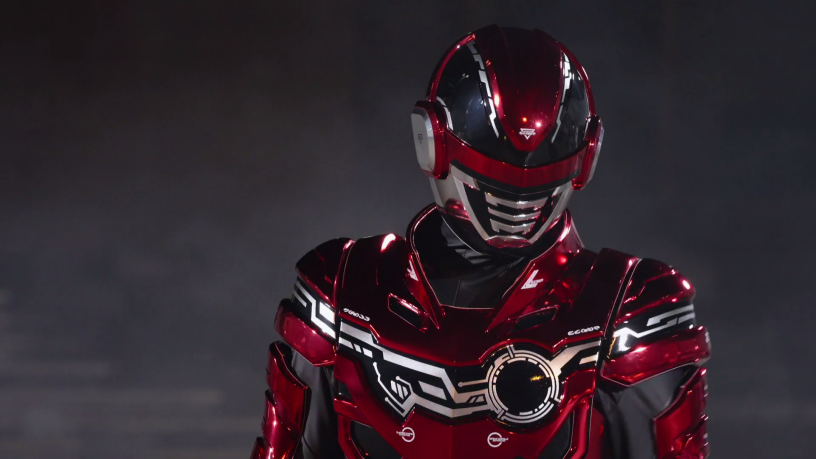
It makes sense that Toei started with Gavan. After fifty years of Super Sentai, asking fans to accept something completely new is a big ask. Bringing back Space Sheriff Gavan was a safer way in. Gavan Infinity looks and feels like a Metal Hero show through and through. Armored suit, visor, the kind of silhouette toku fans can recognize instantly. It felt familiar dressed up as something new, and that was probably the point. Show that the R.E.D. banner can carry the audience forward, before asking them to follow it somewhere less familiar.
Omegahorn Is Where Things Actually Start to Shift
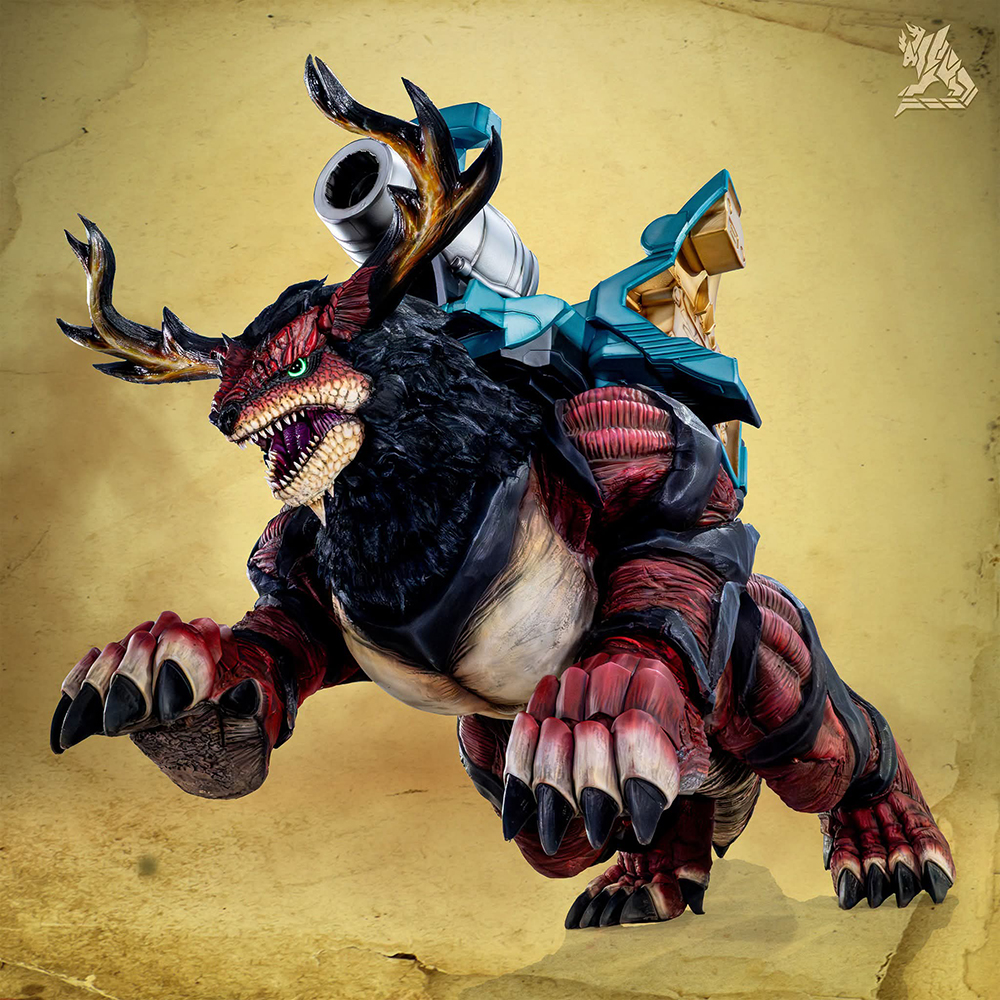
Omegahorn feels like that next, less familiar step. Even the story itself is a different genre. Instead of a cop or an agent fighting a crime syndicate, the lead is Shout, a treasure hunter who finds the Omega Horn, an artifact from a lost civilization. It lets him tame and team up with Horned Beasts (Kakuzyu) using capsule devices called Egorgears, starting with the Horned Beast King Enkaku. That setup feels a lot closer to something like Monster Hunter or Pokemon than to Gavan chasing down criminals. The beast partner isn’t a background mech or a sidekick. It’s basically a second lead character.
That change in story might be exactly why the suit looks so different too.
The Suit Might Be the Bigger Departure
Think about Kamen Rider, Metal Hero, and Garo. They all look very different from each other, but they share one thing underneath. A fixed design format: full armor, a helmet, and no trace of the person underneath once they transform. Even shows that tried something different stuck to that same format. Chouseishin’s Gransazer gave all twelve of its heroes a shared armor style, with only the helmets changing between them. Justiriser tried a different theme too, building its suits around samurai and yamabushi monk designs instead of sci-fi tech. But it was still full armor covering the whole body and face. Different look, same basic shape.
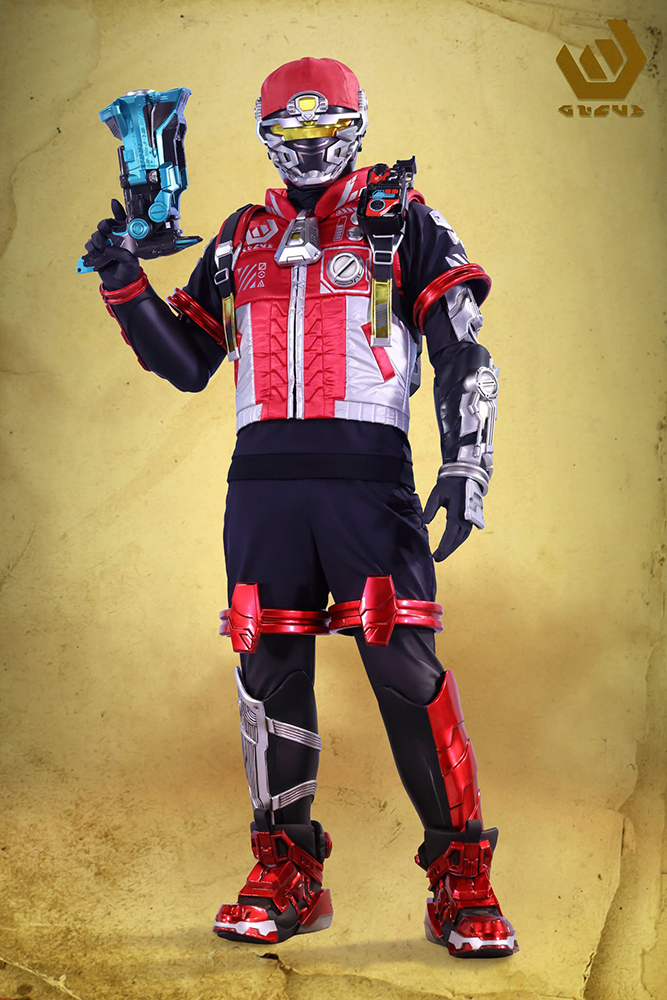
Omegahorn seems to break that pattern. Captain Omegahorn’s design looks more like a jacket-style bodysuit than a hard armor shell. You can still make out a backwards cap, a backpack, and a jacket shape even after Shout suits up. The story backs this up too. This is gear Shout apparently built himself, meant for exploring dangerous ruins and surviving out in the field, not a weapon system handed to him by some organization. It looks more like exploration gear that happens to double as armor, instead of armor that happens to look practical. One site, My Shiny Toy Robots, described it as looking like “a mechanized version of Red from Pokemon.” That’s just one outlet’s take, but it’s a fair way to describe it.
That’s really the interesting part here. It’s not that Omegahorn just switched Metal Hero tech for something more mystical, the way Gransazer and Justiriser played with different themes inside the same format. It seems to be breaking the format itself, keeping a visible, human silhouette in a genre that has pretty much always covered that up completely.
So What Does This Mean for the Name “R.E.D.”?
Go back to Shirakura’s own words: changing format from work to work is the actual mission of Project R.E.D., not a side effect of it. Gavan Infinity showed that the banner can bring Sentai’s audience along into something new without losing them. Omegahorn might be the first real test of what happens once Toei stops holding the audience’s hand. A hunter in a cap and jacket, teaming up with a kaiju instead of piloting one, is about as far from the usual toku look as Toei could have gone this early on. Whether that pays off with fans and toy sales is a separate question. But as a sign of what Toei said it was trying to do, Omegahorn looks like the real thing, not just a name on a banner.
Official Sources
- Exclusive Interview: Shin-ichiro Shirakura on Super Sentai’s Future, the Vision Behind PROJECT R.E.D., and the Brazilian Jaspion – Kyoudai Express
- Super Space Sheriff Gavan Infinity crossover mini-drama – Mantan Web
- The series that will replace Gavan Infinity: Kakusei Hunter Omegahorn – ResetEra
- Kakusei Hunter Omegahorn – Tokunation
- Project R.E.D. Second Series – Kakusei Hunter Omegahorn – Revealed! – Tokunation
- Kakusei Hunter Omegahorn – MyDramaList
- Super Space Sheriff Gavan Infinity – Wikipedia
- PROJECT R.E.D. – Fandom Wiki
- Toei Announces Project R.E.D. – Tokunation
- ‘Super Sentai’ Ending Officially Confirmed, Make Way For Project R.E.D. – Bounding Into Comics
- ‘Project R.E.D.’ Revamping ‘Super Sentai’ For Older Audiences – Bounding Into Comics
- The Potential of Toei’s Project R.E.D – Sakura Central
- The Future of ‘Super Sentai’ Lies in ‘Project RED’ – Gizmodo
- Shirakura’s interview about the cancellation of Super Sentai – ResetEra
- First Impressions: Kakusei Hunter Omegahorn – My Shiny Toy Robots
- Captain Omegahorn suit design review – Facebook/Hikonen Liner
- Shout the Fiery – PROJECT R.E.D. Wiki
- TOKUSATSU ACTION FIGURE Captain Omegahorn – Bandai official
- Kakusei Hunter Omegahorn – PROJECT R.E.D. Wiki
- Kakusei Hunter Omegahorn (Series) – TV Tropes
- Gransazers – Chouseishin Wiki
- Genseishin Justirisers – Wikipedia
This article was researched and drafted with the assistance of Claude AI. All sourced facts and quotes above were verified against the linked articles at the time of writing.