Masami Nagasawa is an unlikely place to begin a conversation about tokusatsu.
For many, she is the face of a particular kind of Japanese romance: the wistful, bittersweet heroine of Crying Out Love, in the Center of the World in 2004 and Operation Love in 2007. Yet her career crosses directly into tokusatsu. She appeared in Godzilla: Final Wars in 2004 as one of the Shobijin, Mothra’s twin fairies, and eighteen years later she played Hiroko Asami in Shin Ultraman. This November she returns to Godzilla in Godzilla Minus Zero, playing Makoto Aoyama, a weather forecaster attached to the Disaster Response Bureau.
It is an interesting coincidence, because Japanese romance and tokusatsu may not be as different as they first appear.
Both are, in their own ways, stories about ordinary people confronting something much larger than themselves.
The hero who keeps failing
Consider the progression from 101st Marriage Proposal to Densha Otoko, Operation Love and The Full-Time Wife Escapist.
In 101st Marriage Proposal, which ran on Fuji TV in 1991, the romantic hero is almost the antithesis of the conventional handsome lead. Tatsuro Hoshino is an ordinary man who has been rejected repeatedly. His great romantic achievement is not a grand display of power or wealth, but his willingness to keep trying after failure.
The joke is contained in the title itself. After 100 failed proposals, perhaps the 101st will work.
It is a simple idea, but a remarkably Japanese one.
The community becomes the team
Then comes Densha Otoko in 2005, where the ordinary man becomes even more ordinary. He is awkward, socially inexperienced and deeply uncomfortable with romance. Yet his transformation does not happen alone. He turns to an anonymous online message board for advice, encouragement and reassurance.

The community effectively becomes his team.
That is where the story begins to resemble tokusatsu.
A Super Sentai hero rarely saves the world alone. The members have different personalities, different strengths and different weaknesses, but together they become something greater than any individual. The power does not come merely from being exceptional. It comes from belonging.
Densha Otoko translates that idea into romance. The hero does not suddenly become a different person. He becomes more courageous because other people give him the confidence to take the next step.
A miracle that solves nothing
Then Operation Love takes the idea almost literally into the realm of the fantastic.
Ken Iwase, played by Tomohisa Yamashita, realises that he has allowed the love of his life to slip away. Rei, played by Nagasawa, is marrying someone else. He is then given the extraordinary ability to return to moments in his past and try again.
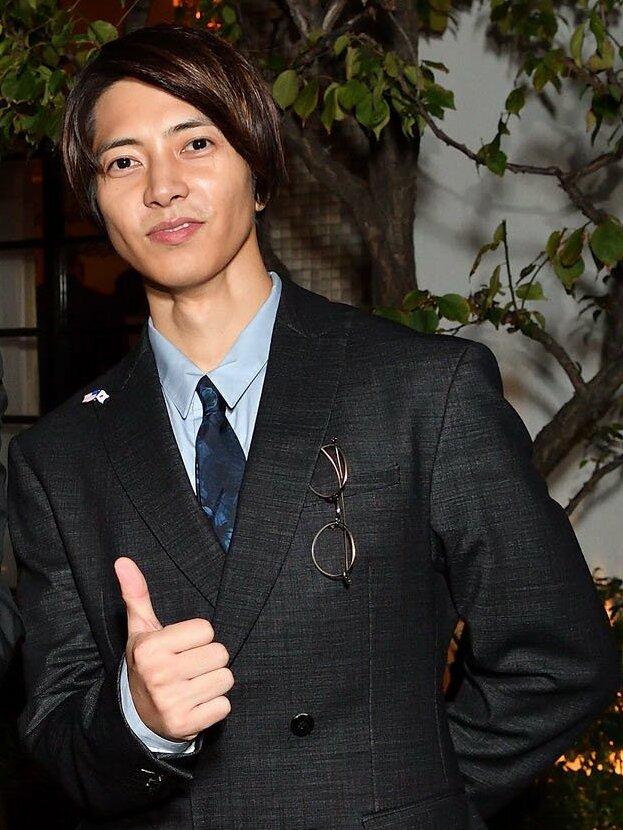
It sounds like a superhero premise.
But the time travel does not actually solve anything.
Ken still has to overcome his hesitation, his cowardice and his inability to say what he feels. He can change the circumstances, but he cannot escape the need to change himself.
The miracle gives him another chance. It does not give him the victory.
That distinction matters, and it is the same distinction tokusatsu makes about a transformation device. The belt does not win the fight. It only lets the fight begin.
When the monster is adulthood
By the time we reach The Full-Time Wife Escapist in 2016, the nature of the monster has changed again. There is no evil rival and no supernatural obstacle. The enemy is modern adulthood itself: employment, economics, gender expectations, loneliness and the difficulty of building a life with another person.

The solution is not a prince rescuing a helpless heroine.
It is two ordinary people learning how to become a team.
Two different fantasies
This is where Japanese romance begins to look noticeably different from the contemporary Korean romantic drama.
Korean romance certainly has its ordinary protagonists, but its fantasy frequently centres on an exceptional romantic figure: the chaebol heir, the brilliant doctor, the powerful prosecutor, the celebrity, the soldier, the supernatural being.
The fantasy is often that an extraordinary person chooses me.
Japanese romance frequently offers a different fantasy: that someone ordinary like me can still be loved.
The difference is subtle but profound. The Japanese romantic hero is often not exceptional because of who he is. He becomes heroic through what he is willing to endure.
The extraordinary lives inside the ordinary
That is precisely the emotional logic of tokusatsu.
The classic tokusatsu hero usually lives an ordinary life. He has a job. He has colleagues. He eats, argues, jokes and falls in love. He is embedded within a community rather than standing above it.
Even when the hero possesses extraordinary powers, the extraordinary exists inside ordinary life.
Ultraman has a human host. Super Sentai has a team. Kamen Rider has a human being beneath the transformation.
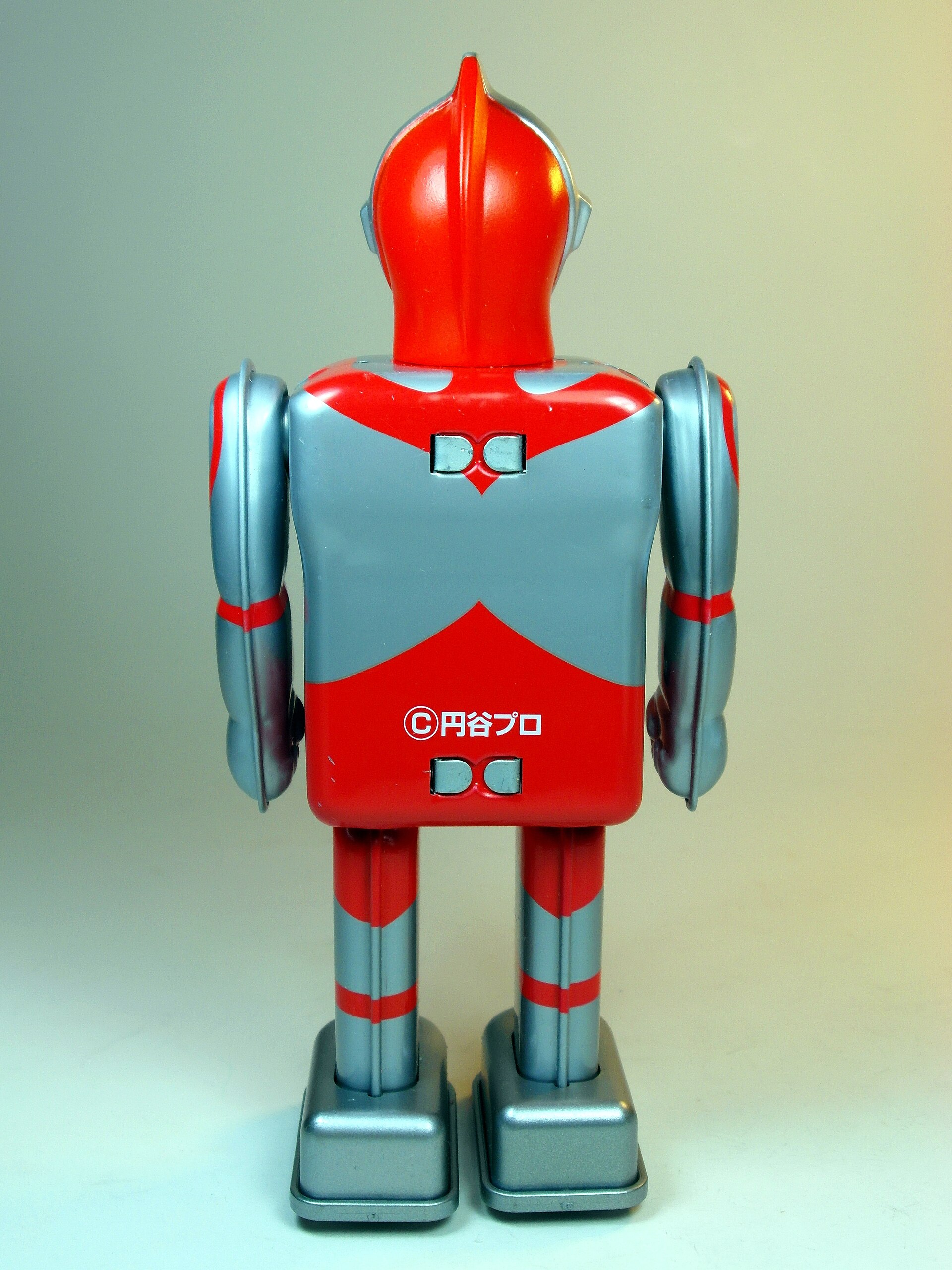
The hero does not abandon ordinary life to become extraordinary. He returns to ordinary life after the transformation.
The same story at different scales
Perhaps that is the deeper connection between Japanese romance and tokusatsu.
The monster may be Godzilla. It may be an alien invasion. It may be loneliness, regret, economic insecurity or the terrifying uncertainty of adulthood.
The scale changes, but the emotional proposition stays remarkably similar. The world is bigger than you. You may not be strong enough. You may not be special enough. You may even fail repeatedly. But you still have to stand up.
And you rarely have to do it alone.
This is why the team matters so much in Japanese storytelling. Densha Otoko has its anonymous supporters. The Full-Time Wife Escapist turns marriage itself into an exercise in cooperation. Super Sentai literally makes teamwork its superpower.
The hero is not the person who can defeat everything. He is the person who keeps moving forward while knowing that he might not be able to.
Why Nagasawa is the right bridge
Perhaps this is why Masami Nagasawa makes such an appropriate bridge between the two worlds. Her romantic roles embody the wistful, uncertain pursuit of human connection, while her tokusatsu appearances place her inside stories about humanity confronting forces vastly beyond its control.
Romance and tokusatsu may therefore be telling the same story at different scales.
One asks whether an ordinary person can overcome the enormous obstacles standing between two people. The other asks whether ordinary people can survive an enormous threat to humanity itself.
Both arrive at the same answer. You do not have to become extraordinary to face an extraordinary world.
You need people beside you. You need the courage to take the next step. And above all, you need the resilience to keep going.
Official sources
- Tsuburaya Productions official site
- Ultraman official portal (M-78, Tsuburaya Productions)
- Shin Ultraman official site
- Godzilla official site (Toho)
- Toho Co., Ltd. official site
- Kamen Rider official portal (Toei)
- Toei Company official site
- Fuji Television official site
- TBS Television official site
For the latest on these films and series, follow Tsuburaya Productions, Toho, Toei, Fuji TV and TBS through their official channels above, and follow @tokuasia.sg on Instagram for more tokusatsu history, analysis and news.
This article is written with assistance from Claude.
Godzilla Godzilla Minus Zero Shin Ultraman Super Sentai Ultraman
Previous Next