In this Murazen interview, we caught up with Eshaan, representative of the Murazen team, to talk about the story, inspirations, and journey behind Murazen.
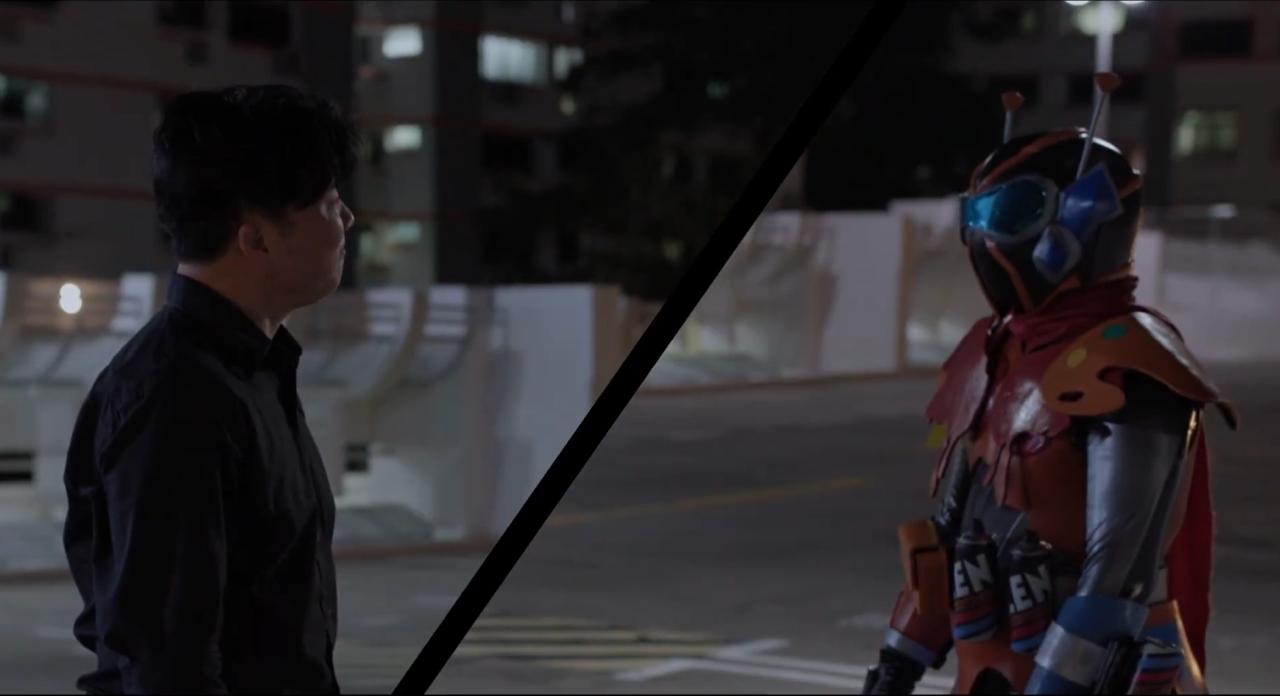
Q1: For those who are stepping into this world for the first time, how would you describe the character of Murazen? Walk us through the core story and the fictional backstory that drives this universe.
I would describe Murazen as your typical coming-of-age superhero short film uniquely rooted in the traditions of tokusatsu, particularly Kamen Rider and Super Sentai. While it embraces many of the genre’s iconic elements, at its core, it is a story about identity, recognition, and what it truly means to help others.
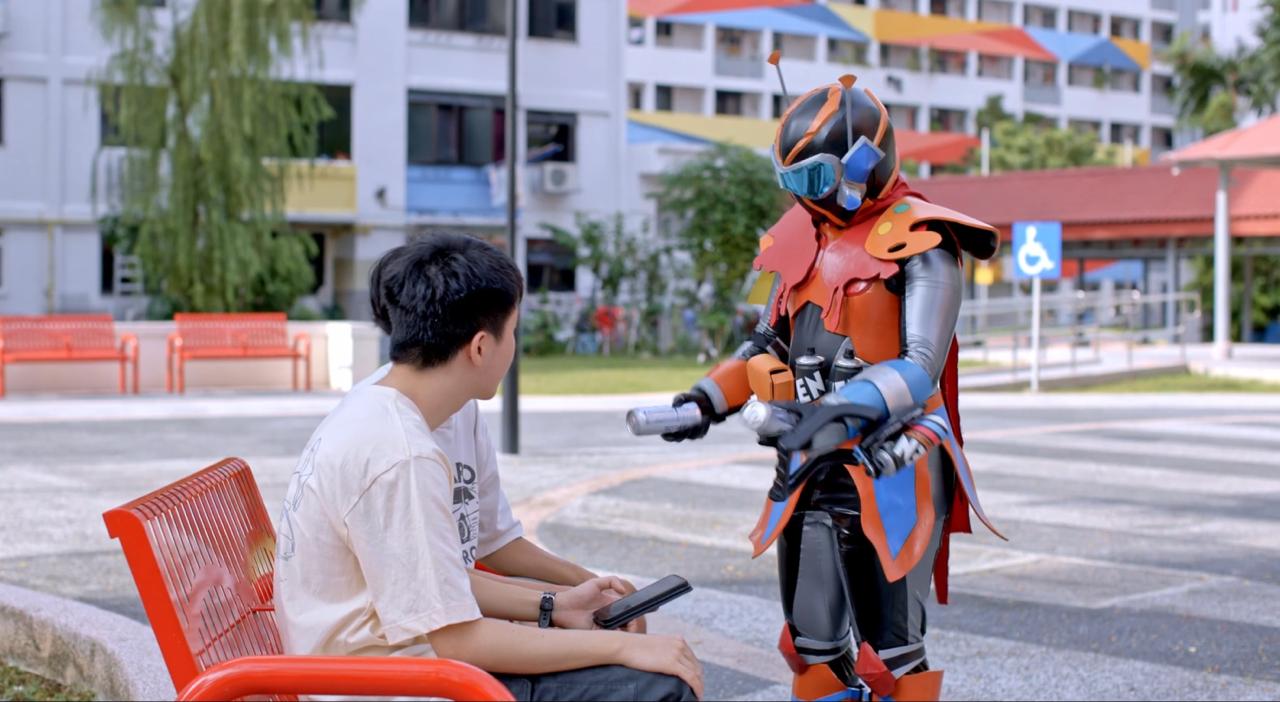
The story follows Elliot, a teenage boy and devoted Kamen Rider fan who constantly tries to help those around him. However, his good intentions are often misunderstood, leading him to face rejection from the very people he hopes to support. Over time, Elliot begins to believe that the only way his efforts will ever be appreciated is if he hides behind a mask and becomes someone else, just like the heroes he admires.
His wish unexpectedly comes true when he is granted a mysterious device that allows him to transform into the hero he always imagined himself becoming: Murazen.
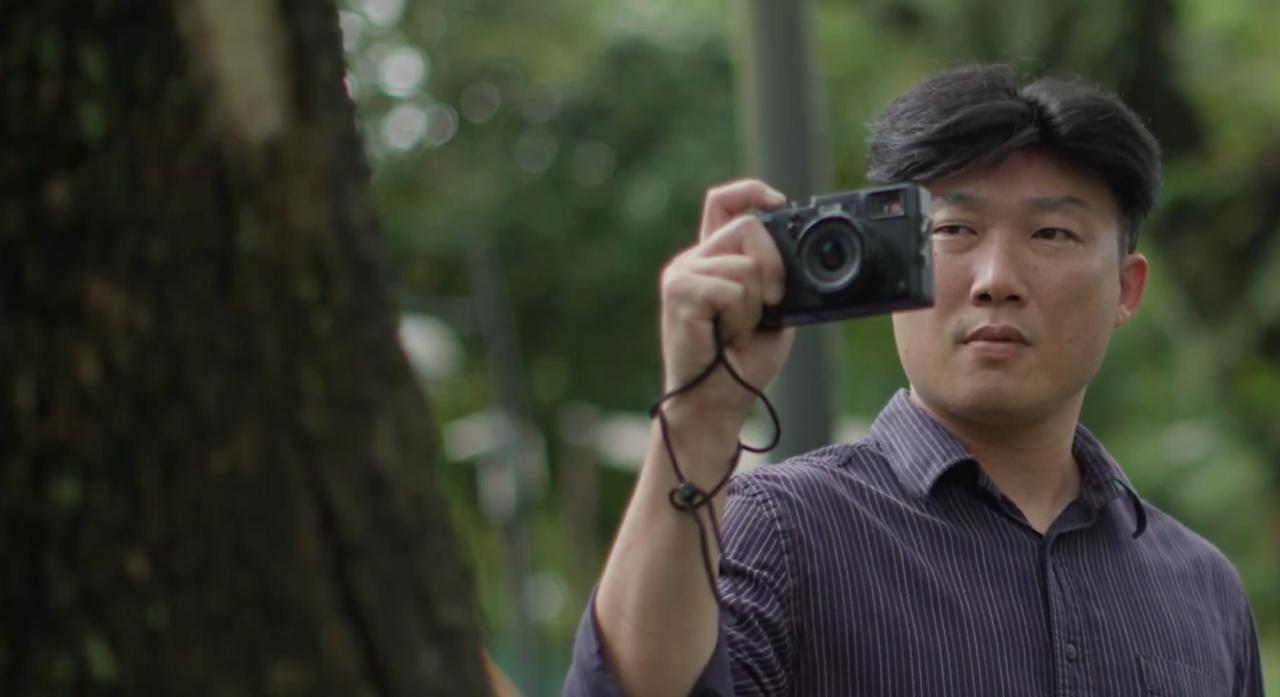
As Murazen becomes increasingly popular, a journalist named Terrance, grows resentful of the attention surrounding the masked hero. In an effort to elevate his own reputation, he begins publishing misleading stories and narratives that paint Murazen in a negative light. While both characters wish to be seen as people who make a difference, Elliot builds others up through his actions, whereas the journalist seeks recognition by tearing Murazen’s reputation down. Both pursue the same goal through the same idea, yet their contrasting values ultimately place them on opposing paths.
Faced with growing self-doubt, Elliot must learn how to continue helping others without allowing Terrance’s attacks to define him. In doing so, he discovers that true heroism is not about wearing a suit and mask or having powers.
Q2: Every great hero has a real-world origin story. What did the initial spark, early brainstorming sessions, and discussions look like when Murazen was being conceived? Looking back, what have been the toughest creative or production challenges you’ve had to overcome to bring this project to life?
Me and my team had many early brainstorming sessions on what Murazen would look like, what his powers would be, and even what his fighting style would be. In fact, Murazen looked very different in the beginning. Originally, he was just an unnamed boy dressed in an opera mask and cape, pretending to be a Kamen Rider. That concept stuck around for quite a while, but our lecturer challenged us to think bigger, and I’m really glad they did.
One of the biggest discussions we had was whether Murazen should even have powers. Once we decided to move in that direction, we started throwing out different themes to see what would stick. We landed on art as a core theme, but then came the question of what kind of art. We explored ideas ranging from watercolour and oil painting to digital art and sketching before eventually arriving at spray paint. The moment we landed on that idea, everything seemed to click, like a eureka moment.
Ironically, deciding whether Murazen should have powers ended up being one of our toughest creative challenges. When I first pitched the project, I imagined him as an ordinary teenager pretending to be a Kamen Rider, similar in spirit to films like Kick-Ass. Part of that came from my own fear of being too ambitious. Our lecturers had made it clear that they would not accept projects that were overly reliant on sci-fi concepts or heavy visual effects, and knowing how closely tokusatsu is associated with both of those things, I intentionally pitched a very grounded, bare bones version of the idea.
As pre-production progressed, opinions within the team began to differ. Some of us wanted to stick with the original concept of a powerless hero, while others wanted to embrace the larger-than-life side of tokusatsu with superpowers and a proper hero suit. The debate became so divided that we eventually settled it with a group poll. In the end, the superpowered version won, and looking back, I think that decision really helped Murazen become the project it was meant to be.
On the technical production side, the list of challenges honestly felt endless. We dealt with everything from suit pieces falling apart to CF card failures and technical hiccups on set. However, the toughest challenge was enduring the long and physically demanding shoot days. As the more physically capable member of our camera team, I was responsible for filming many of the stunt-heavy and action-oriented scenes, which were exhausting.
One day in particular stands out. It was the final day of our reshoots in January. To make the call time, I stayed overnight at our set decorator’s house, woke up at 4am, packed all our equipment, and arranged transport to our filming location at Admiralty Park. From the moment we arrived, it felt like everything that could go wrong did go wrong. The suit was damaged and needed emergency repairs using Blu Tack and gaffer tape. We encountered CF card issues that required troubleshooting on the spot. Actors arrived late. Permit-related complications surfaced. Since it was our final day of shooting, every issue felt even more stressful.
Despite all of that, we somehow managed to keep moving forward. Everyone adapted, solved problems as they appeared, and supported one another throughout the day. So thank god for that.
Q3: Tokusatsu has such a rich history. What were the defining influences and visual inspirations behind Murazen’s design and tone? If there is one specific tokusatsu series that acted as the blueprint for this project, which one was it—and does it happen to be your personal favorite?
The main defining influences for the look and tone of the film were definitely Kamen Rider Gavv and Ex-Aid due to their more vibrant colour, unique use of visual effects and overall the whole vibe of each series! The first transformation was heavily inspired by Emu Hojo’s first transformation in Ex-Aid. While at the same time, Gavv’s title sequence helped to set a foundational style for the montage sequence. I think even character-wise, you can see parts of Shouma and Emu in Elliot due to their kind nature and desire to help others. And yes, Gavv is quite a few of our team member’s personal favourites! And literally the only one which we’ve all completed fully but we are working on watching more. We all love the relationship between Shouma, Hanto, Sachika, and Lakia and wanted to emulate that with Elliot, Sarah, and eventually Wei Han!
There are plenty more inspirations from Tokusatsu that we embraced with Murazen, especially within his suit. Murazen’s antennae are actually paint brushes when you look close enough—that is directly inspired from Kamen Rider Vram’s Rider helmet, where he has a spoons for antenna due to his motif being pudding. His driver/transformation device is very heavily inspired by wrist changers from Kamen Rider’s sister series, Super Sentai. More specifically, Kyuranger and Toqger. Me and my editor had the actual DX toys to use as inspiration for the final driver. Also, while not an inspiration, a fun fact about the Murazen suit is that due to budget constraints, we used a pre-existing rider undersuit that we purchased directly from Taobao! It was the Jack Revice undersuit. Some other contenders were the Genm’s Dangerous Zombie undersuit or the Evil’s Bat Genome undersuit!
Q4: Beyond the action and the suit design, what is the emotional or thematic core of Murazen? When the credits roll, what is the ultimate message or takeaway you hope sticks with the audience?
Wow what a deep question haha… Seriously though, at its core, Murazen is a film about kindness, but not kindness in an idealised or effortlessly perfect sense. It’s about what happens to kindness when it’s tested by something like rejection.
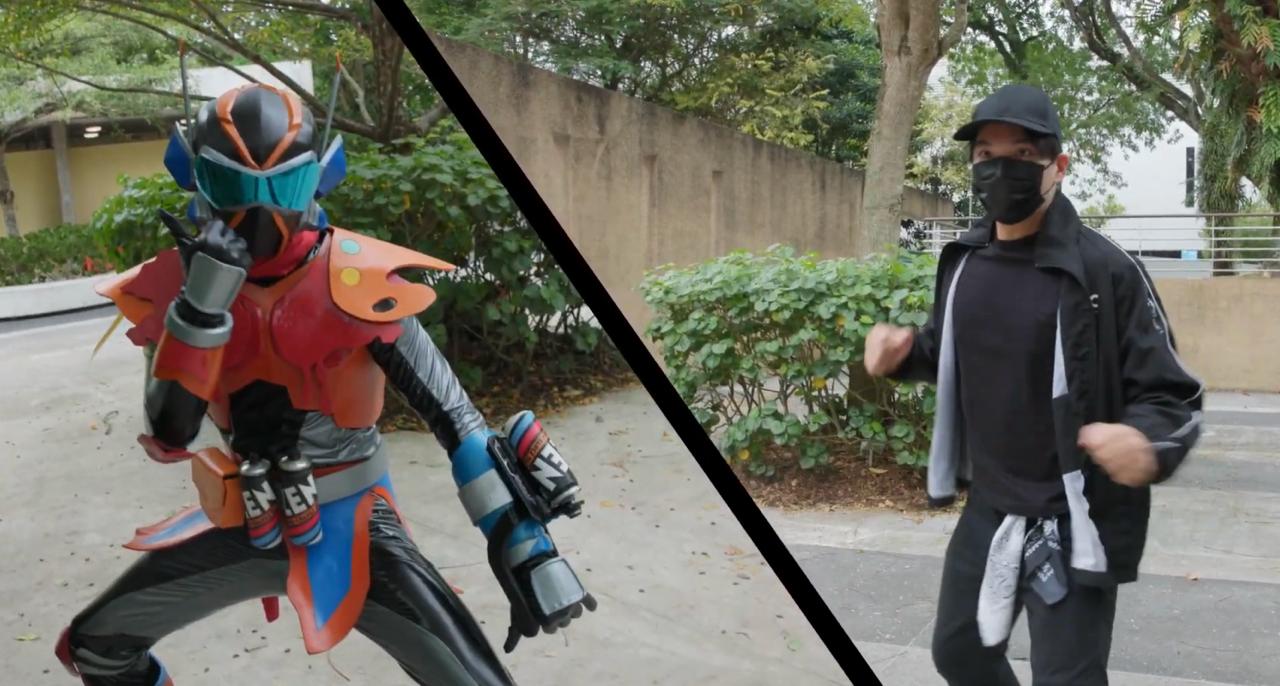
Elliot’s character is someone who genuinely wants to help others. He’s not driven by ego or recognition, but by a simple, sincere instinct to do good. However, the world around him doesn’t always respond to that kindness in the way he expects. Time and time again, when he tries to help, he gets dismissed, rejected, or pushed aside. And over time, that begins to affect how he sees himself and what he believes he’s capable of. That frustration slowly shapes the idea that he can’t make a difference as just “Elliot.” Instead, he starts to believe that he needs to become something else (Murazen), a form, an identity, a symbol that gives him the strength or authority to finally be taken seriously and actually help people.
But the film isn’t really about transformation in the traditional hero sense. It’s about the emotional cost of needing to become “something else” just to feel like your kindness matters.
By the end of the story, Elliot comes to understand that heroism isn’t tied to power, identity, or transformation. It’s not about becoming a different person. It’s about the decision to act anyway. To step forward, even when you know you might be rejected again. Even when it doesn’t feel rewarded or acknowledged.
So again, at its core, Murazen is about that tension between hope and frustration, the feeling of wanting to do good in a world that doesn’t always receive it, and still choosing to try. Not because it’s easy, but because that first step itself is already an act of bravery.
And ultimately, it’s about realising that kindness isn’t something you wait to be validated, it’s something you choose to keep offering, even when it doesn’t come back to you the way you hoped.
Q5: Finally, what does the horizon look like for Murazen? Is this a self-contained chapter, or can fans look forward to seeing the character return in future projects or expansions?
I am really glad you asked this question! Personally, I really want to continue Murazen’s story. However, that ultimately comes down to TP’s decision to hand me the rights for the character and story. That does not mean that I am going to give up easily! Regarding Murazen, me and some of my friends are discussing possible sequel and prequel ideas right now. But I think I can share with you one thing and that is if you have watched the short film, you would know someone else is now in custody of that Murazen driver and that person will be the one to continue Murazen’s legacy!
Outside of Murazen, I wish to continue “Unmasked Productions”. At first this name was just a placeholder name, me and my group decided to use for our instagram handle. However, I am serious now on continuing this. To keep making tokusatsu based in Singapore. One day I wish to make Singapore’s first short films themed around Super Sentai and Ultraman! Just like how Murazen is technically the first local Kamen Rider short film here in Singapore. I hope to collab with other local tokusatsu series as well, whether that be in Singapore (Sacred Guardian Singa, Genforcer) or other SEA tokusatsu (Kapten Justice, Mighty Guardian). Maybe even work with future filmmakers to make their own tokusatsu ideas and bring them to life, to give them a platform.
My biggest dream is to turn Unmasked Productions into its own production house one day I hope to have my tokusatsus screened on TV or in theatres. I don’t want awards, I just wish to be seen and show how impactful this genre is.
Curious to see more from the team? Follow Unmasked Productions on Instagram for updates on Murazen and what’s next.