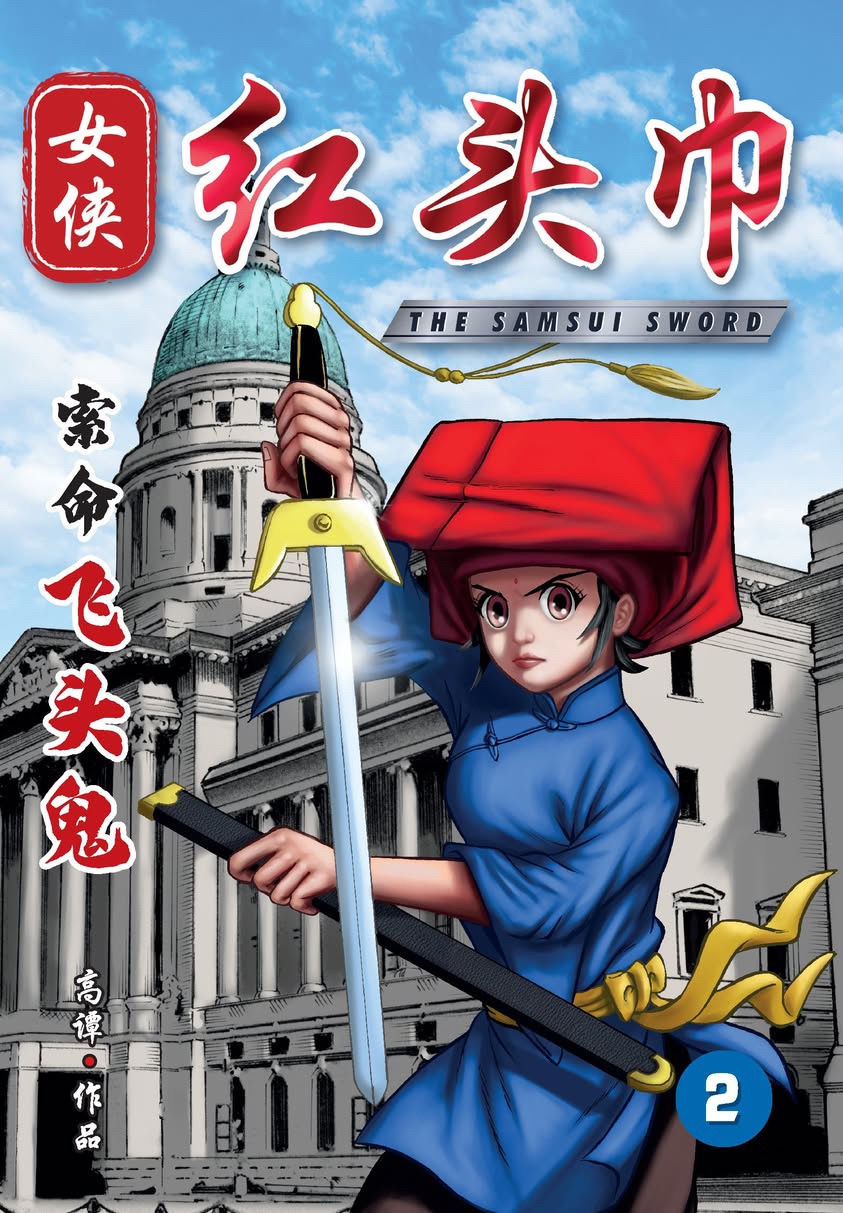
When we reviewed The Samsui Sword (Vol. 1), we came away genuinely impressed by how seamlessly local history, Nanyang folklore, and Hong Kong manhua sensibilities were woven together into something that felt wholly its own. Now, with two volumes out and a third in the works, we sat down with the creator himself, Gotham, to find out more about the man behind the blade.
Q1: To kick things off, could you give us a brief introduction to yourself for readers who might be coming across The Samsui Sword and your work for the very first time?
Hi! I am Gotham, a hobbyist comic artist based in Singapore. The Samsui Sword is my first original local comic concept and my first indie published comic. It is a wuxia-inspired work that draws clear inspiration from Hong Kong kung fu manhua created by legendary artists such as Tony Wong and Ma Wing-shing.
Q2: The premise of The Samsui Sword is incredibly unique. By day, Gui Er (贵儿) is an ordinary, hardworking Samsui woman, but by night, she wields a blade to fight the supernatural. What inspired you to merge the historical grit of Singapore’s iconic Samsui women with the fantastical elements of a martial arts vigilante?
Due to my love of kung fu comics, I have always wished to one day create a kung fu comic of my own. But it would not be easy. Hong Kong has produced so many great kung fu comics that it is difficult to come up with something unique that can stand out from them.
One day, an idea struck me: why not combine local Singaporean elements with the kung fu genre? Most kung fu stories are set during the early years of the Republic of China, so I decided to set my story in early Singapore instead. This was something that older local dramas used to do, but it is rarely seen in Singaporean dramas today.
A question came to my mind: what if 雾锁南洋 (The Awakening) was combined with 中华英雄 (Chinese Hero: Tales of the Blood Sword)? After some research, I realised that the Samsui women would be a perfect fit. Their iconic red headscarves create a striking visual identity that immediately captures attention. Beyond their distinctive appearance, the Samsui women also represent resilience, determination, and the pioneering spirit of Singapore’s early years, making them compelling protagonists for a wuxia-inspired story.
Every hero needs an opponent, and I decided to make Gui Er’s enemy the Orang Minyak (油鬼仔), a supernatural creature from Malay folklore known as an oily predator that stalks its victims in the night. Seeing these two characters clash in an old kampong setting, where local history, folklore, and martial arts come together, felt like a story that had to be told.
Q3: Visually, the comic has a striking, cinematic aesthetic that beautifully captures the atmosphere of early Singapore. Can you talk us through your art process? How did you approach balancing historical accuracy with the highly dynamic, stylised action sequences?
I chose a style that evokes the nostalgic feel of 1980s comics, one that I believe successfully captures the atmosphere of Singapore’s early years, when the nation was still finding its footing and establishing its identity. During the early stages of designing the Samsui women and their period attire, I revisited classic local dramas such as 红头巾 (Samsui Women), 豆腐街 (Tofu Street), 雾锁南洋 (The Awakening), and 和平的代价 (The Price of Peace) for inspiration. To create authentic backgrounds, I also researched historical photographs of kampongs and early Singaporean streetscapes.
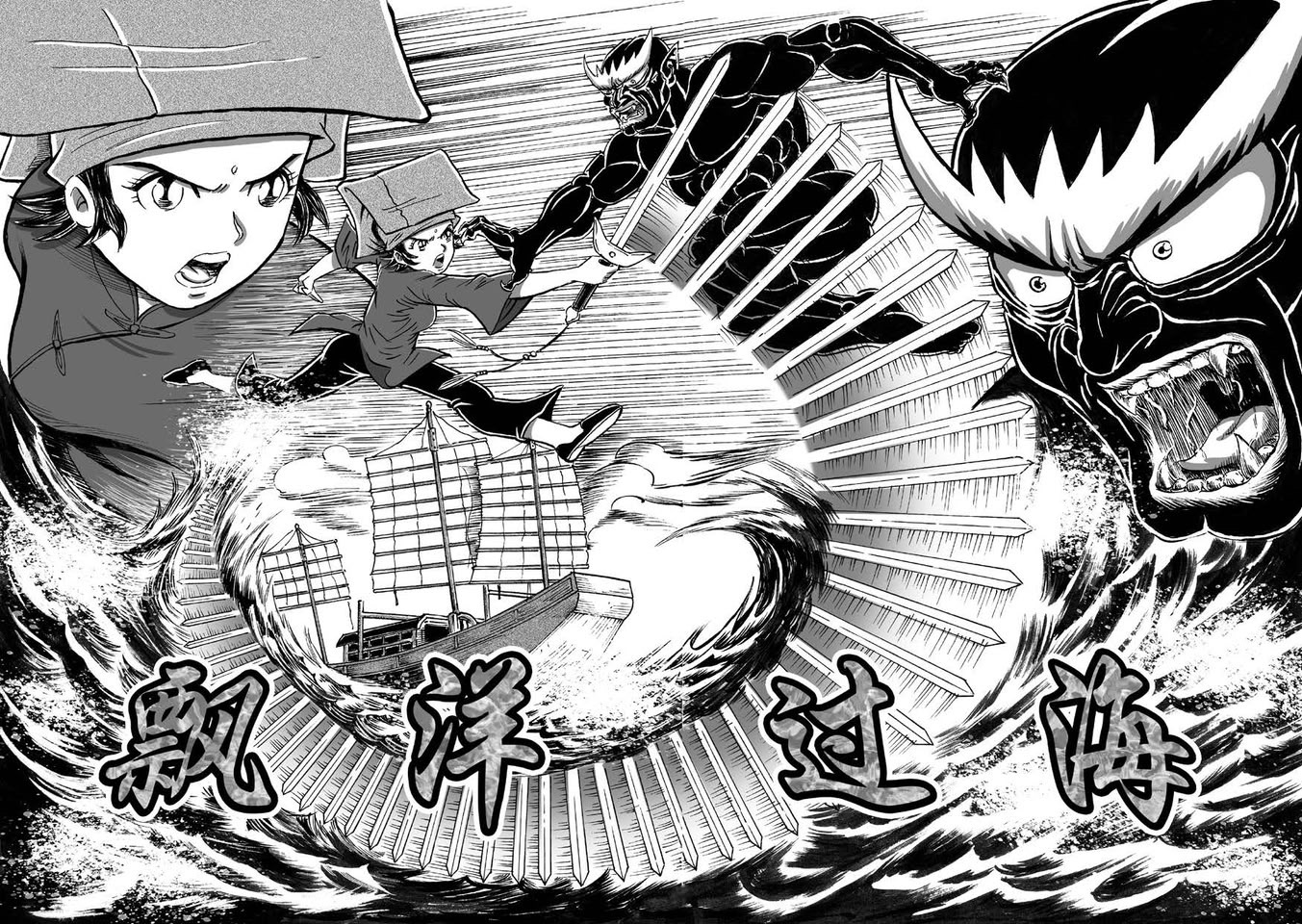
For Gui Er herself, I first equipped her with a distinctive Chinese sword as her signature weapon, and incorporated several wuxia-inspired design elements to set her apart from a traditional Samsui woman, including a pair of kung fu shoes and a red mark on her forehead, a visual feature commonly associated with wuxia heroes. In Volume 2, I further enhanced her martial-artist appearance by adding a kung fu sash around her waist.
Q4: In her adventures, Gui Er faces off against classic regional supernatural forces, like the Orang Minyak (油鬼仔). What is your process for researching and designing these creatures of the night? Are there any other local urban legends or mythical entities you’re eager to have the Samsui Sword clash with down the road?
For the Orang Minyak, I drew inspiration from a classic Shaw Brothers horror film that portrayed the creature with powers similar to Marvel’s Venom. I found the concept both frightening and visually striking, so I incorporated some of those characteristics into my own interpretation, while also adding elements of kung fu martial arts to make it a more formidable opponent for Gui Er.
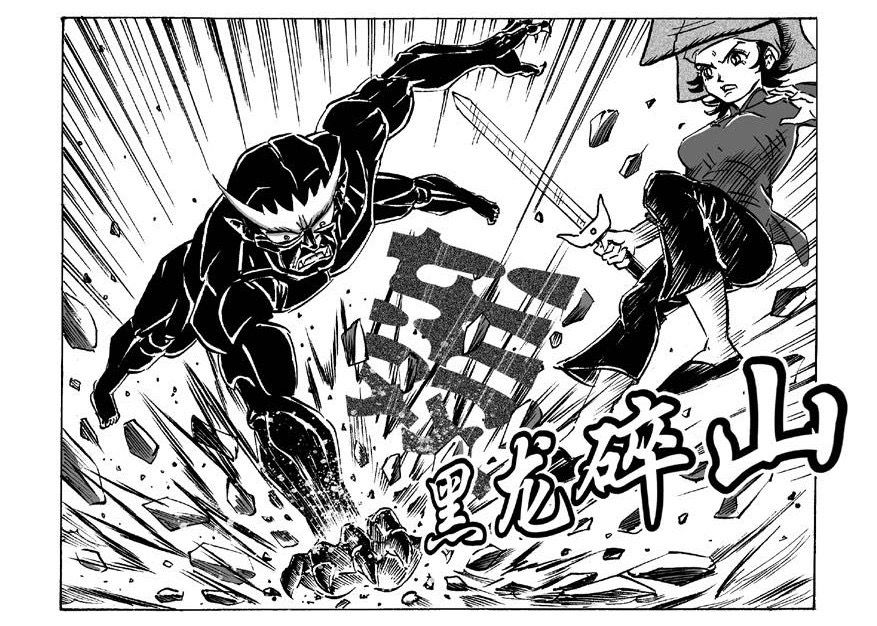
My long-term vision for the series is for Gui Er to encounter and battle various local urban legends and mythical creatures from Southeast Asian folklore, so that each story can explore a different aspect of the region’s cultural heritage while maintaining the action and excitement of a wuxia adventure. Volume 2 already sees Gui Er confront the Penanggalan (飞头鬼), a terrifying supernatural creature from Malay folklore. By combining martial arts with local legends, I hope to create a world that celebrates both Singapore’s multicultural roots and the rich mythology of the region.
Q5: Unlike many contemporary local indie comics that default to English, The Samsui Sword features prominent Chinese text and storytelling that feels incredibly authentic to the old-school Nanyang setting. What are some of the rewards and challenges of publishing a Chinese-led comic in Singapore’s current indie scene?
Many contemporary local indie comics are published in English, which gives them a better chance of commercial success, as English reaches a wider local audience. But as you can see from Gui Er’s combat system, her special techniques are rooted in Chinese idioms (成语). The Mandarin language not only complements this approach but also feels more authentic to the old Nanyang setting and the cultural roots of the Samsui women. That is the core reason I chose to keep the comic in Mandarin.
The challenge is that sales depend heavily on readers who can read Chinese, a relatively small pool in Singapore’s market. The upside is that publishing in Mandarin opens the door to readers in Malaysia, Taiwan, Hong Kong, and Mainland China. In that sense, the language choice helps the comic connect with a broader Chinese-speaking audience while preserving its unique cultural identity.
Q6: One of the standout creative choices in the comic is how Gui Er’s special moves are named after traditional Chinese idioms. What led you to this decision, and was it difficult to find the right idioms that could translate into visual, dynamic comic book techniques?
Using idioms as special moves is one of the elements that has made wuxia novels and Hong Kong manhua so memorable. For Gui Er’s techniques, I wanted to go a step further by incorporating elements inspired by the actual work of the Samsui women on construction sites, blending martial arts storytelling with lived, laboured history.
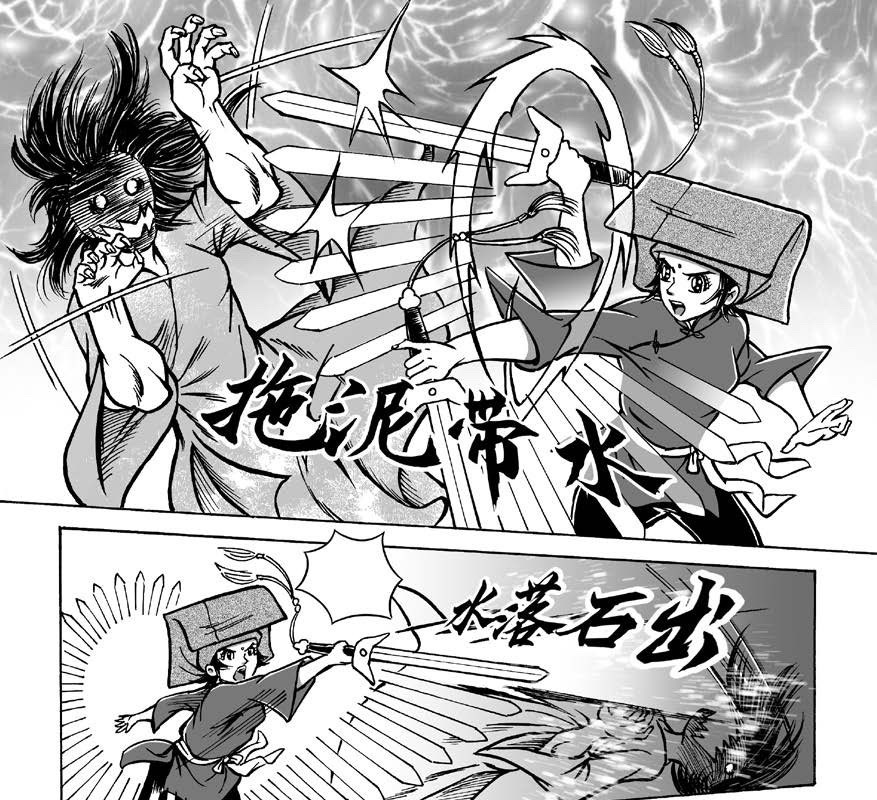
Developing these techniques was one of the most challenging aspects of creating the comic. I had to find suitable Chinese idioms and then translate them into martial arts moves that were both visually exciting and meaningful, while ensuring the names and movements reflected the strength, resilience, and labour associated with the Samsui women. My years of reading wuxia novels and Hong Kong manhua gave me the foundation to pull it off, but it was not a simple process.
Q7: Now that the groundwork for Gui Er’s journey has been laid, what can you tease about the future direction of the story? Can fans look forward to seeing the “Samsui Sword universe” expand into a longer-running epic?
My future direction for the story is to have Gui Er encounter and battle various local urban legends and mythical creatures from Southeast Asian folklore. Her journey is driven by her search for the Orang Minyak, the creature that murdered her Sifu (婆婆). This tragic event ultimately pushes her toward maturity and leads her to discover the meaning of her destiny.
Volumes 1 and 2 have been published, and I am currently working on Volume 3. As for Gui Er’s next opponent, that remains a secret for now. Watch this space.
About the Creator
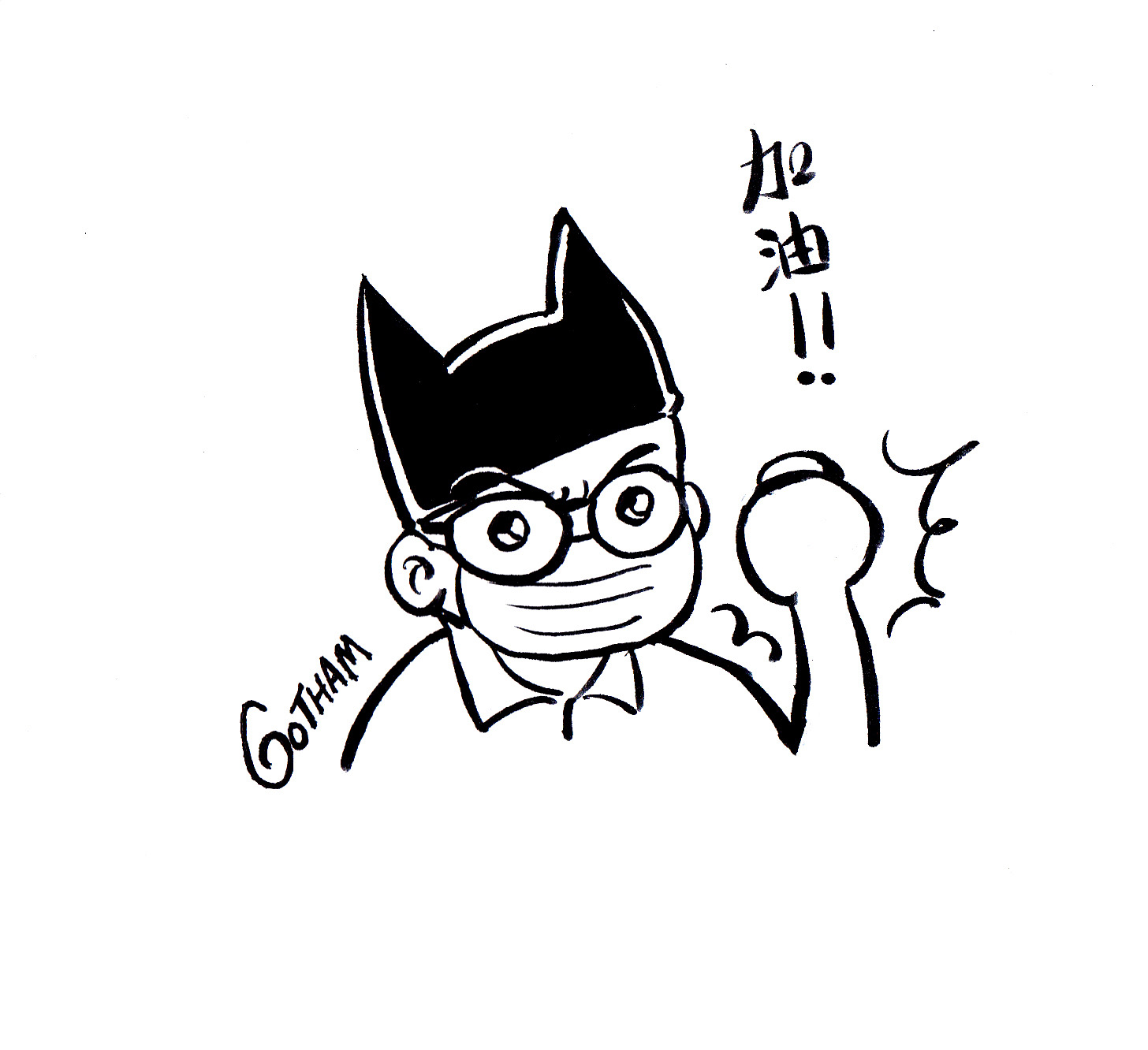
Gotham is a hobbyist comic artist based in Singapore with a deep love for Hong Kong kung fu manhua and wuxia storytelling. The Samsui Sword is his first original indie comic, blending Singapore’s early history and Nanyang folklore with the classic martial arts genre.
Want to follow Gotham’s work and keep up with Gui Er’s journey? The Samsui Sword Volumes 1 and 2 are available now, with Volume 3 currently in the works.
Ready to follow Gui Er on her journey? Pick up your copy of The Samsui Sword at Yuyi and support an independent local creator.