In March 1948, the Allied occupation purged Eiji Tsuburaya from Toho. His offence was craftsmanship. During the war he had run special effects for Toho’s Educational Film Research Division, created by imperial decree, and on The War at Sea from Hawaii to Malaya (1942) he staged the attack on Pearl Harbor with more than two hundred miniature ships and aircraft. It was a film built to persuade the Japanese public that the Pacific War could be won.
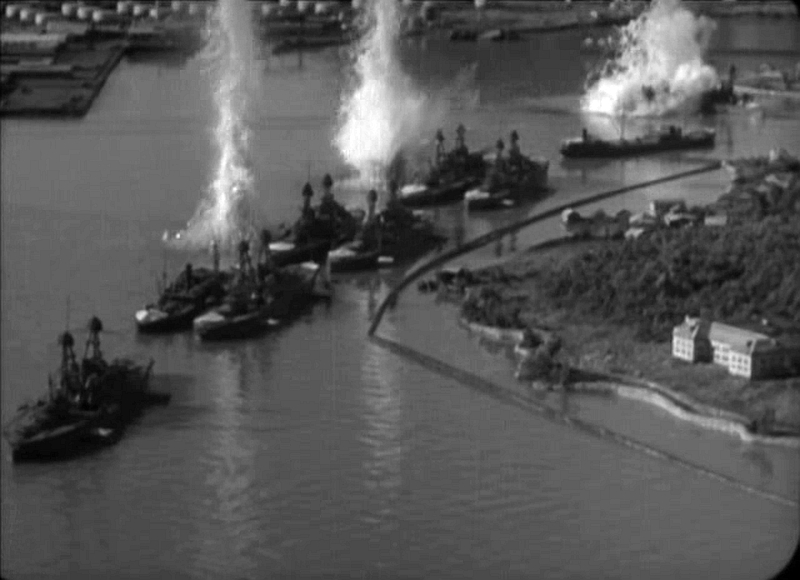
He had made the war look magnificent. Six years later, that was a disqualification.
Everything Tsuburaya built afterwards was made by a man who had already used miniatures to tell his country a story about itself, and had watched that story collapse. He returned to Toho in the early 1950s, and within a few years he was destroying Tokyo instead of defending it. Godzilla and Ultraman stand at either end of that second career. Godzilla is the darkness and grief of postwar Japan. Ultraman is the hope that followed it.
1954: what the war left behind
Godzilla opened on November 3, 1954, nine years after the surrender. It could not have opened much earlier. The occupation’s Press Code had barred open discussion of Hiroshima and Nagasaki, and it was lifted only in April 1952. Japanese filmmakers had spent seven years unable to say the thing directly. Godzilla arrives two years into the first window in which it could be said at all, and it is said in metaphor, by a monster.
The immediate spark was not the bombs but a fishing boat. On March 1, 1954, the American hydrogen test Castle Bravo at Bikini Atoll came in at fifteen megatons against the six its designers expected, and its fallout caught the Daigo Fukuryu Maru, the Lucky Dragon No. 5, out of Yaizu in Shizuoka. Its crew came home irradiated. Japan’s fish markets emptied.
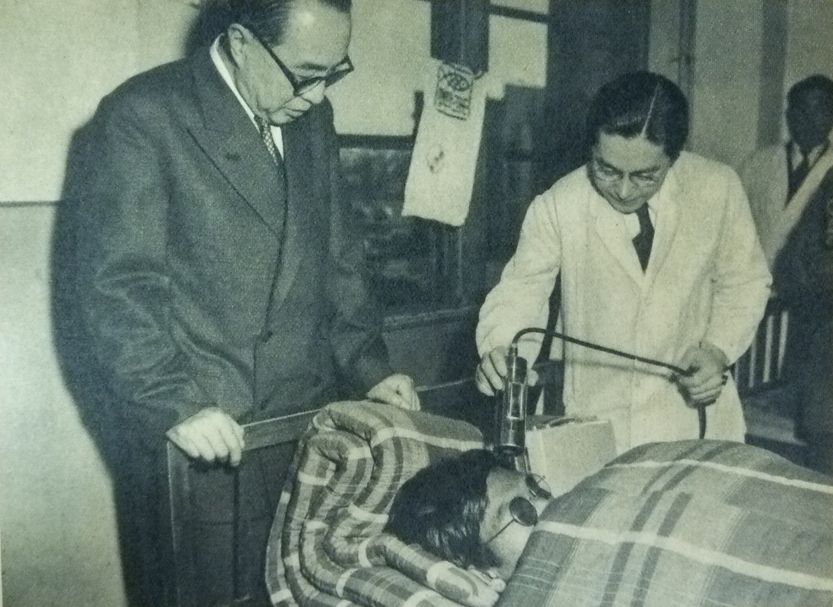
Producer Tomoyuki Tanaka read about it on a flight and wondered what such a blast might wake. Ishiro Honda, who had seen flattened Hiroshima with his own eyes on his way back from the war, directed. Toho’s Iwao Mori had the monster’s hide modelled on keloid scars, the raised scars left by radiation burns. Tsuburaya made it move.
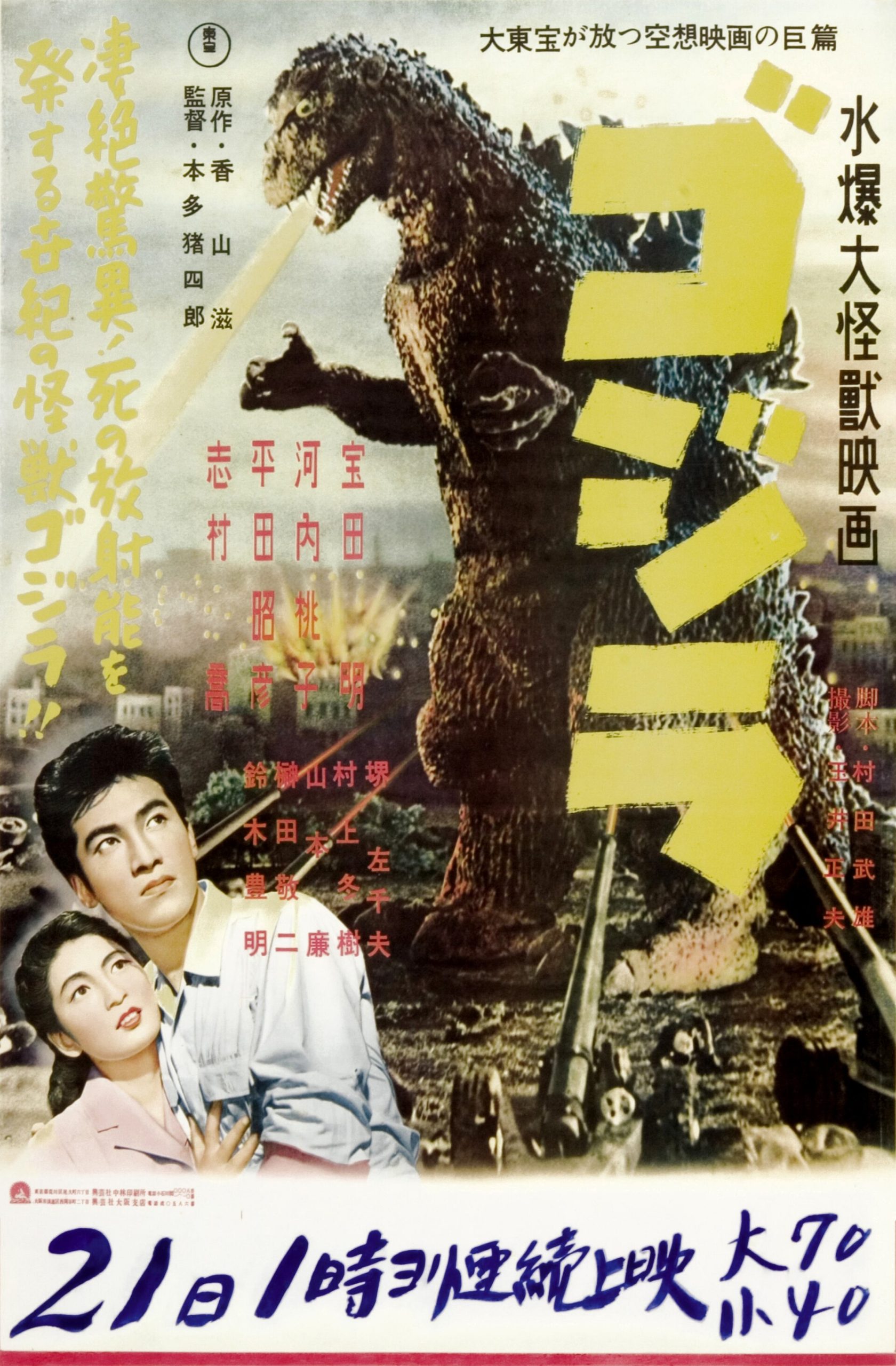
Godzilla was a committee’s creation, not one man’s. But the terror on screen is Eiji Tsuburaya’s, and it is the same technique he had once used to make the burning of enemy fleets look like a triumph.
Honda was explicit about the method. “I took the characteristics of an atomic bomb,” he said, “and applied them to Godzilla.” Tanaka put it more bluntly: Godzilla is the son of the atomic bomb.
So the destruction of Tokyo is not spectacle. The families running, the children crying, the hospital corridors filling past capacity: a Japanese audience in 1954 was not being shown something it had to imagine.
Nine million six hundred thousand of them bought tickets, making it the eighth best attended Japanese film of the year. The critics were hostile. They accused Toho of profiteering off the war dead and off the Lucky Dragon. Honda remembered them calling it grotesque junk, something you would spit up. They were reacting to a wound, which is evidence that the film found one.
The scientist who burns his own notes
Godzilla looks backward. He asks what the war left behind. And note how the film ends. Daisuke Serizawa has invented the Oxygen Destroyer, the only thing that can kill Godzilla. He uses it once and then dies with it, burning his notes, so that no government can ever hold what he has made.
Science in 1954 is not evil. It is unbearable. The only safe scientist is a dead one.
1966: what comes next
Twelve years later Japan was a different country, and had only just become one. The Tokyo Olympics and the Tokaido Shinkansen both landed in 1964. A sharp recession followed almost immediately, and then, from around October 1965, the long expansion later called the Izanagi boom: nearly five years of roughly ten percent annual growth. By 1968 Japan was the second largest economy in the non communist world.
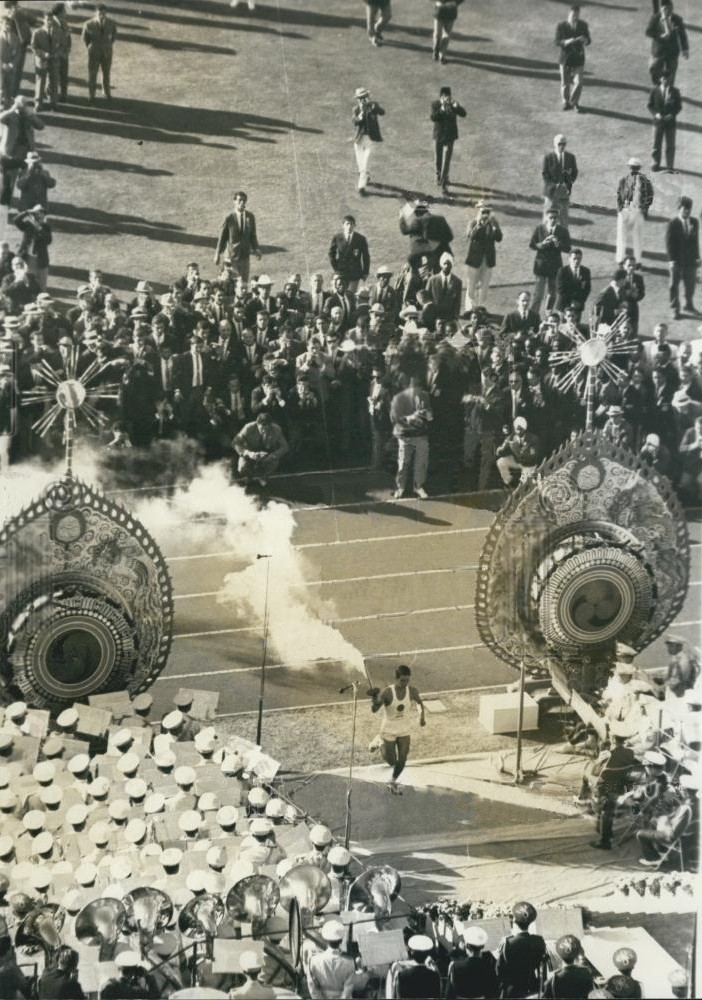
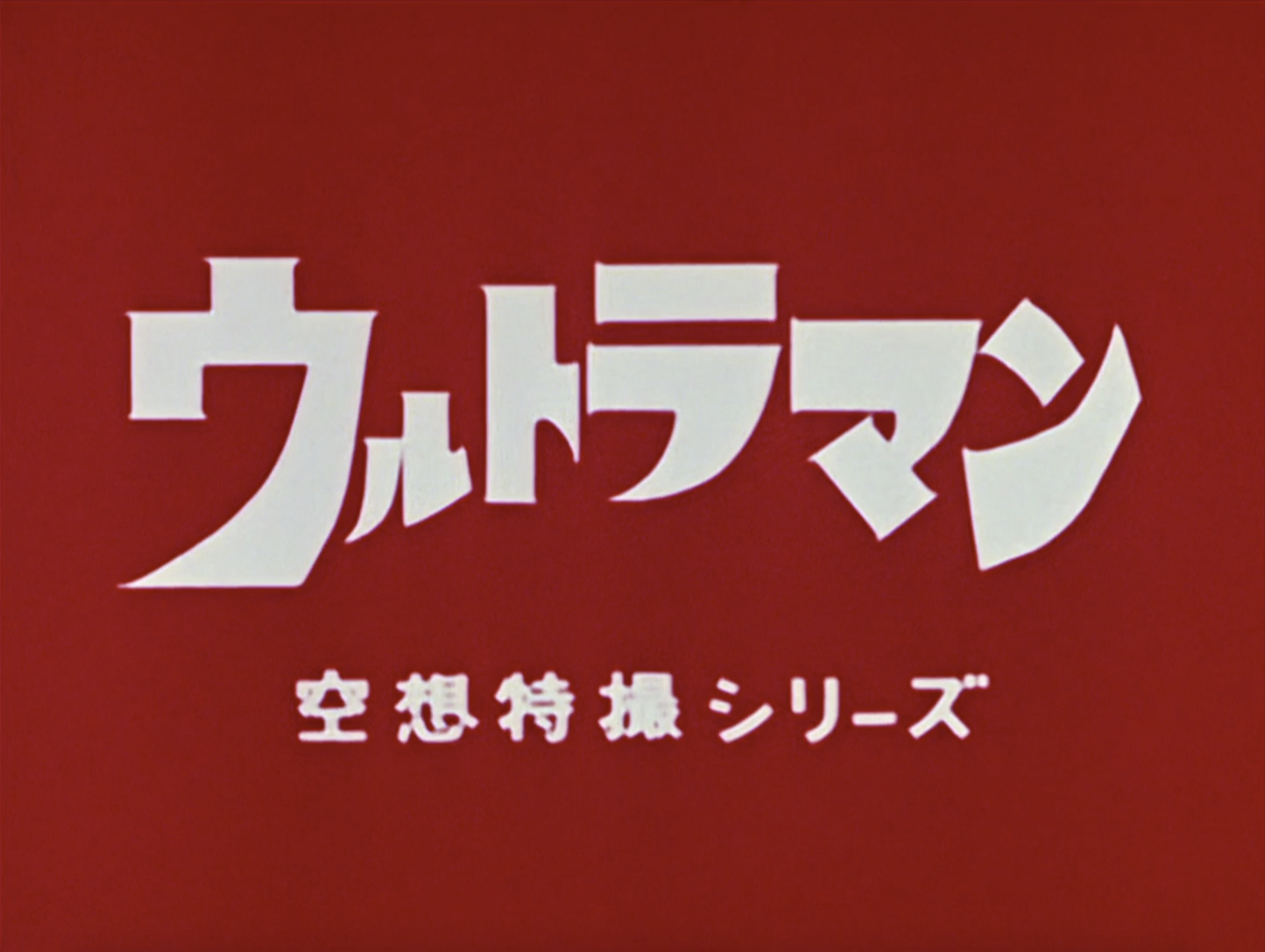
Ultraman premiered on TBS on July 17, 1966, at the beginning of that climb, not at the top of it. This matters. Ultraman was not a product of Japanese prosperity. It arrived at the moment Japanese families first began to believe prosperity was coming, when the aspirational objects were the “three Cs,” a car, an air conditioner and a colour television, and most households owned none of them.
Colour as a bet on the future
The show was made in colour anyway. Japan had begun colour broadcasting in 1960, but sets were expensive enough that they mostly lived in bars, hotels and shop windows. Colour would not reach ninety percent of households until the mid 1970s. Almost every child who watched Ultraman in 1966 watched a red and silver giant in grey.
The colour was a bet on the future rather than a description of the present. So was the show. It worked. Ultraman ran thirty nine episodes and averaged a 36.8 percent rating, peaking at 42.8.
The creative work was not Eiji Tsuburaya’s alone here either. Tetsuo Kinjo wrote the series outline, Tohl Narita designed the character with sculptor Akira Sasaki, and Tsuburaya’s son Hajime directed alongside Toshihiro Iijima. Eiji ran the company and set the terms. He sent Narita’s first drafts back for being too alien and sinister. He wanted something a child could love.
That was a standing instruction. He called his work “dreams for children,” and told the writers of Ultra Q, the series that preceded Ultraman: do not destroy the dreams of children.
The difference from 1954 shows up most clearly in the humans. In Godzilla, the men in lab coats are helpless or damned. In Ultraman, the Science Special Search Party, a United Nations body in the internationalist spirit of the Olympic years, investigates, flies, engineers, and fights.
Two endings, twelve years apart
If you want the whole argument in two scenes, take the endings.
1954: a scientist destroys his own discovery and himself, because human beings cannot be trusted with it.
1966: in the final episode, Ultraman fires his Spacium Beam at the monster Zetton, and Zetton absorbs it and throws it back. The hero loses. Earth is saved by Dr. Iwamoto’s Anti Gravity Bullet, a human weapon, built by the Science Patrol, fired by people. The god from the sky is carried home defeated. Humanity finishes the job itself.
Godzilla is technology that escaped human control. Ultraman is technology returned to human hands.
The honest complication
The neat opposition has a problem, and it is worth naming rather than hiding. Godzilla did not stay a mourner. From Ghidorah, the Three-Headed Monster in 1964 he was already defending Japan, and by Son of Godzilla in 1967 he had a child. By the time Ultraman went to air, Godzilla was a children’s hero too.
So the real dividing line is not Godzilla against Ultraman. It is 1954 against the 1960s. Both franchises crossed it.
Nor is Ultraman naive. In episode 23, “My Home Is Earth,” an astronaut named Jamila is abandoned in space by an unnamed Cold War power, mutated, and returns as a monster. The accident was buried to protect public faith in science. The Science Patrol kills him and lays a memorial plaque. The monster is the victim. The institutions lied.
Kinjo, who wrote the outline, was Okinawan, and he pushed that vein much harder in Ultraseven: occupation, genocide, who gets counted as a person. Ultraman is hopeful. It is not innocent. Its hope is the kind that has already seen the alternative.
Dreams for children
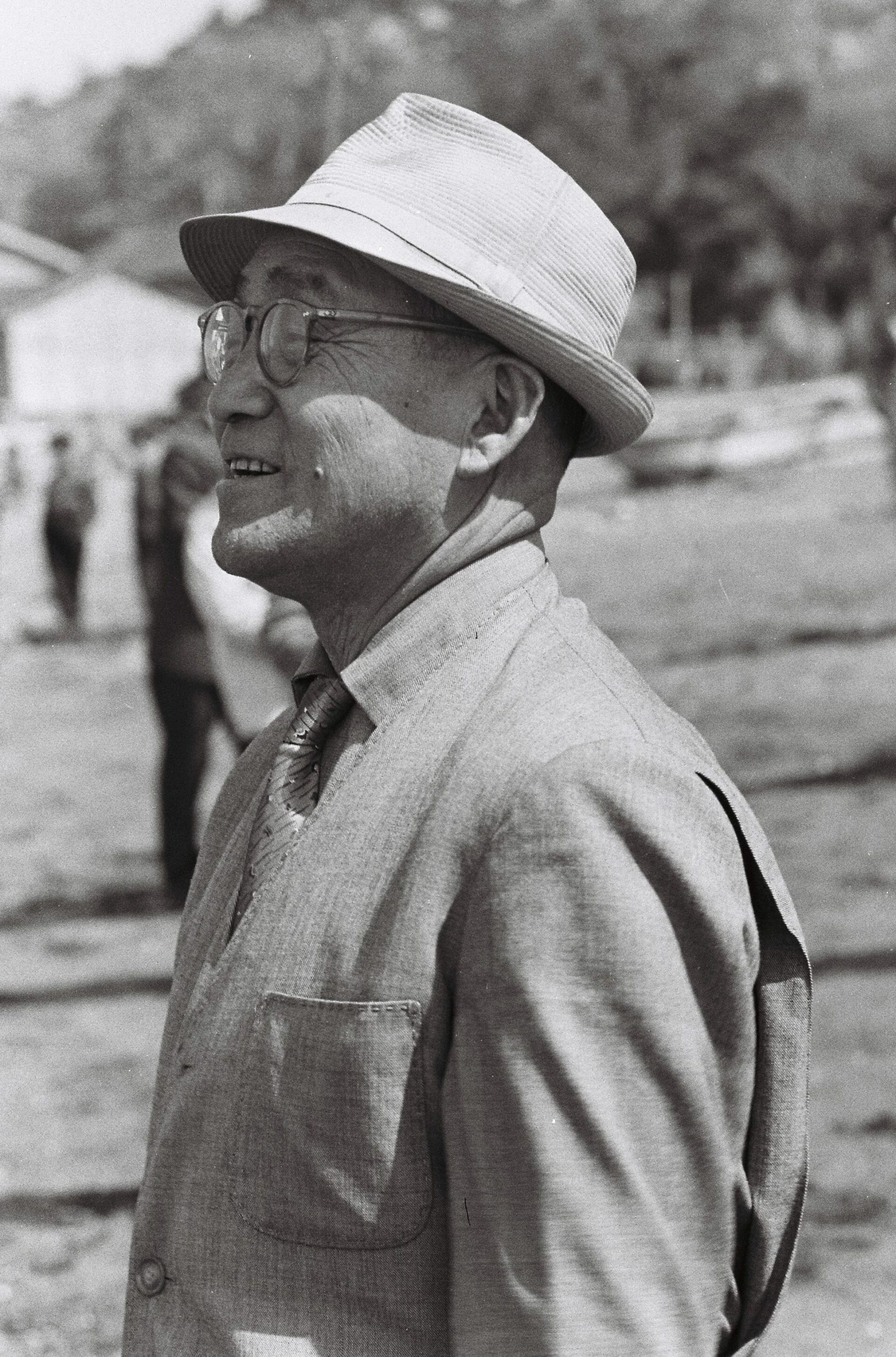
Eiji Tsuburaya died on January 25, 1970, at sixty eight, with the Ultra series still running and Japan on the verge of becoming a technological superpower. He spent his working life making Japan’s relationship with its own machinery visible: first as propaganda, then as grief, then as protection.
Godzilla mourns the old Japan. Ultraman helps imagine the new one. Godzilla says: remember what happened. Ultraman says: now imagine what comes next.
More on tokuAsia: Tokusatsu Is Not Inferior to Western Superheroes, Your First Japanese Godzilla Movie: Minus Zero and Ultraman Teo Episode 1 First Impressions.
Official sources
- Tsuburaya Productions official site
- Ultraman official portal (M-78, Tsuburaya Productions)
- Godzilla official site (Toho)
- Godzilla and World War II, The National WWII Museum
- Gojira (1954), National Museum of Nuclear Science and History
- Godzilla’s Conscience, The Criterion Collection
- The little known history of secrecy and censorship in the wake of the atomic bombings, The Conversation
- August Ragone, Eiji Tsuburaya: Master of Monsters (Chronicle Books, 2007)
- William M. Tsutsui, Godzilla on My Mind: Fifty Years of the King of Monsters
For the latest on both franchises, follow Tsuburaya Productions and Toho through their official channels above, and follow @tokuasia.sg on Instagram for more tokusatsu history and news.
This article is written with assistance from Claude.