Five rows of shelves, five eras of heroes. That is the shape of The People’s Tokusatsu, the new tokusatsu exhibition at MINT Museum of Toys, and tokuAsia was invited to walk it at the media preview on Saturday 24 October, ahead of its launch at the end of the month.
It is also the follow-up to something we suspected back in June. Covering MINT Lumens’ Superior 8 Ultra Brothers preview, we noted early signs that the museum might keep its tokusatsu momentum going. It has, and on a far bigger scale than one more screening.
What is The People’s Tokusatsu?
On the surface, it is a history of how tokusatsu was made, decade by decade: the practical effects and the storytelling, told through rare vintage toys from the 1970s onwards. Many of the pieces date from the Showa era, the golden age of Kamen Rider and Ultraman, and they are the kind of thing most fans only ever see in old catalogues or auction listings.
The title is where the real idea lives, and the exhibition’s opening panel states it in one line: “The heart of tokusatsu has always belonged to its audience.” MINT describes the project as turning its exhibition shelves into “a collaborative space that celebrates the imagination, craftsmanship and passion of the tokusatsu community.” Official artefacts from the museum’s collection stand alongside pieces owned, and in some cases made, by fans. Tokusatsu, in other words, as something its audience helped build.
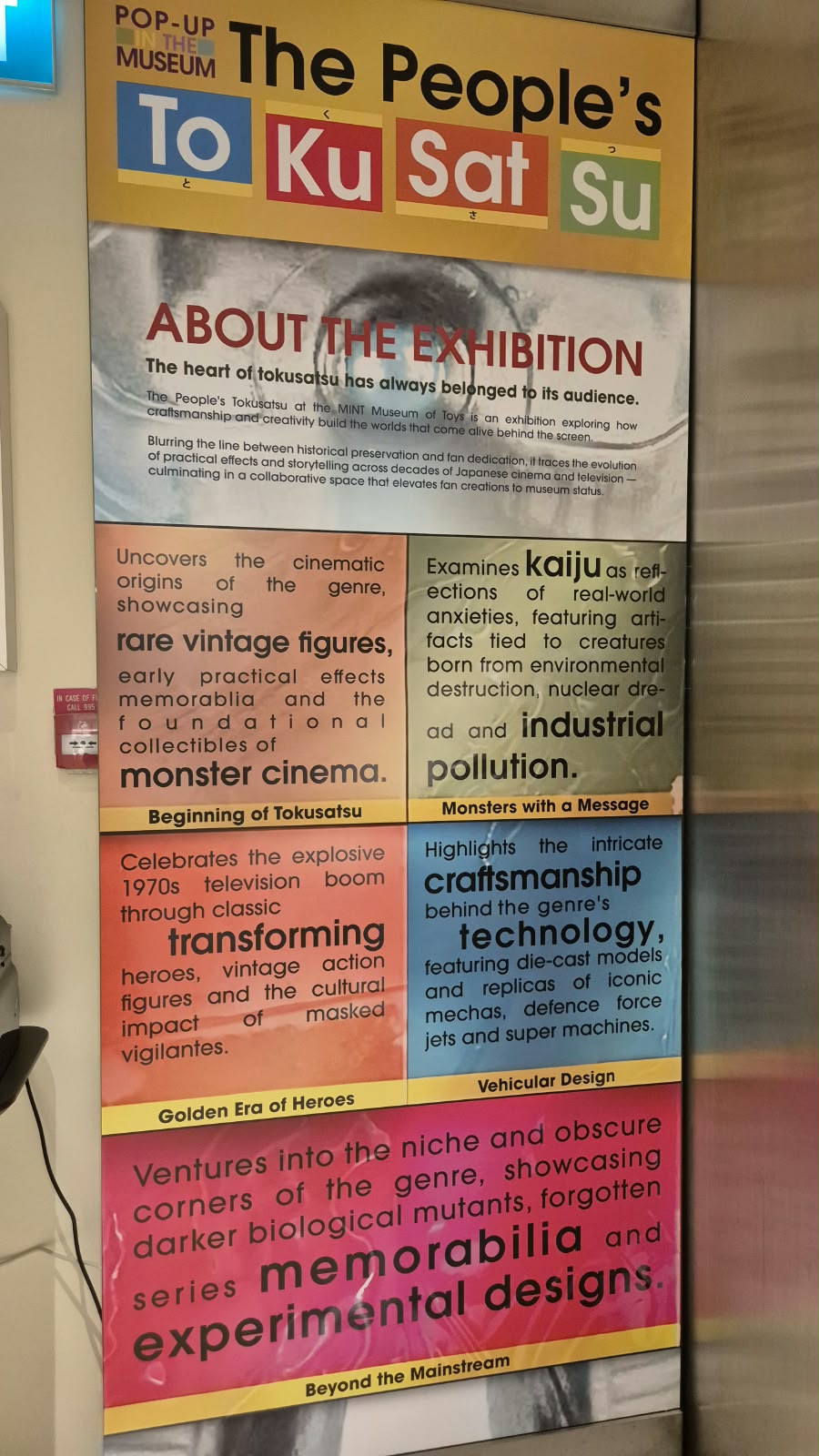
That suits the genre unusually well. Tokusatsu has always been a craft of physical things, as we argued in Tokusatsu Is Not Inferior to Western Superheroes: suits, miniatures and props, and the toys that carried those heroes off the screen and into children’s homes.
The five rows run in order, and walking them feels like walking through tokusatsu history itself.
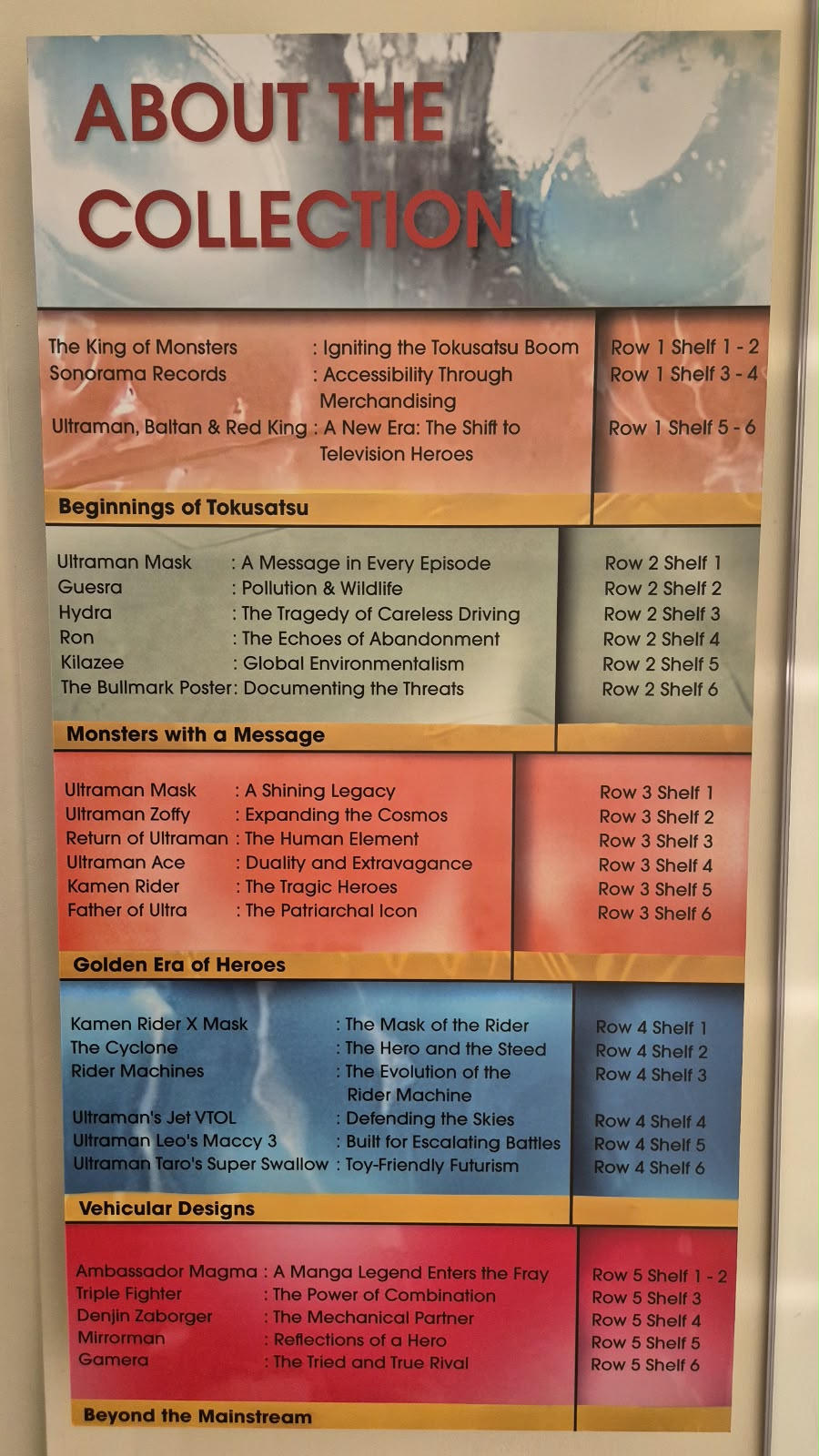
Row 1: Beginnings of Tokusatsu
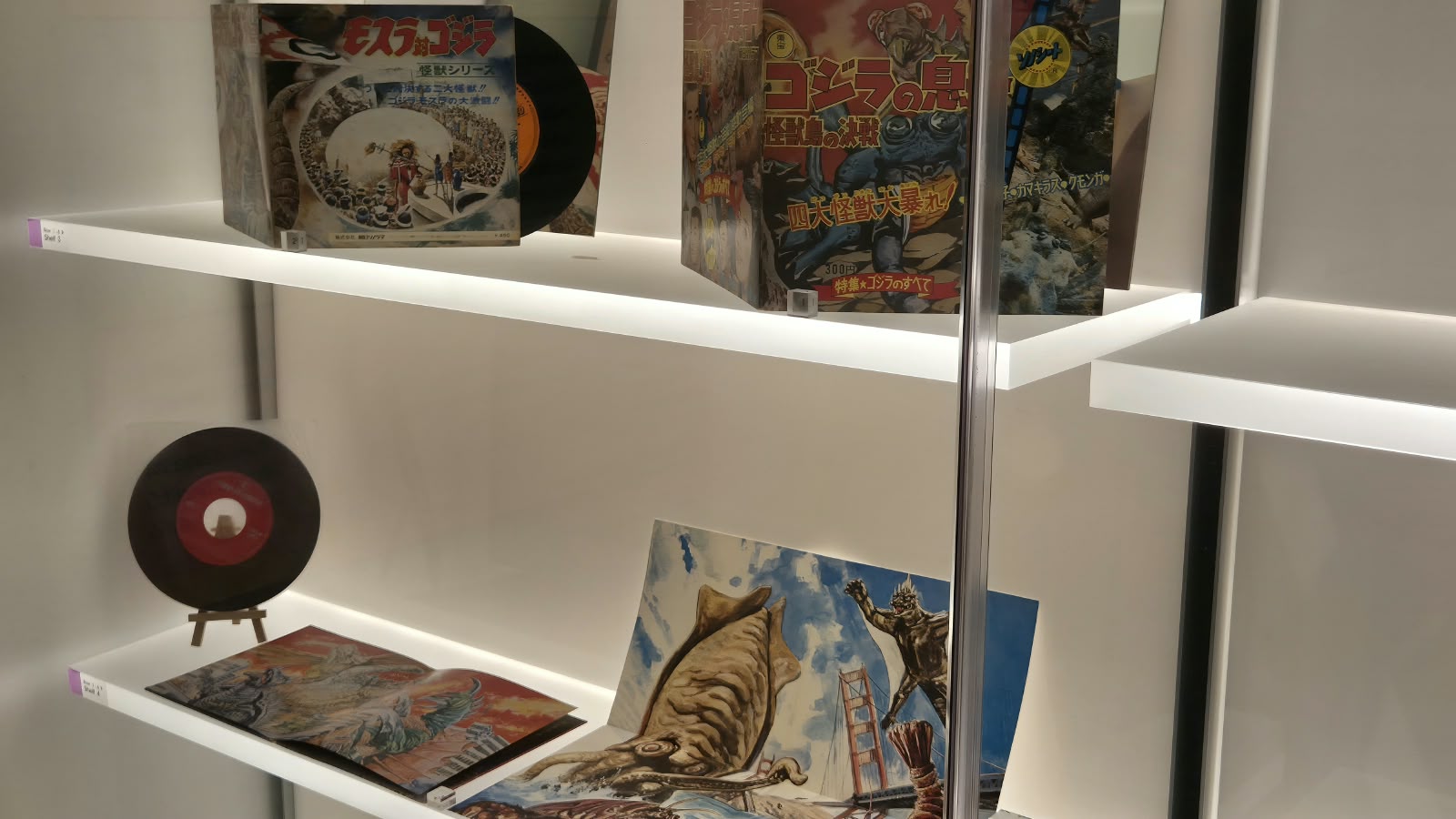
The walk starts where it should, with the King of the Monsters. Godzilla set off the tokusatsu boom, and the first row treats him as the opening statement. (For how that 1954 film and Ultraman came out of the same postwar workshop, see Godzilla and Ultraman: Two Sides of Tsuburaya’s Japan.)
Beside him are Sonorama records, the merchandise that brought heroes into fans’ homes and made the shows accessible to everyone. Then comes the pivot that defined the genre: Ultraman, Baltan and Red King, marking the big shift from cinema screens to television heroes.
Row 2: Monsters with a Message
This is the row that rewards slowing down. Its premise is that these kaiju were never just villains. Each one carried a lesson.
An Ultraman mask anchors the row, standing for a message in every episode. Around it, the exhibition lays the lessons out monster by monster. Guesra stands for pollution and the threat to wildlife. Hydra, for the tragedy of careless driving. Ron, for the echoes of abandonment. Kilazee, for global environmentalism. A Bullmark poster rounds it off, documenting the threats the heroes faced.
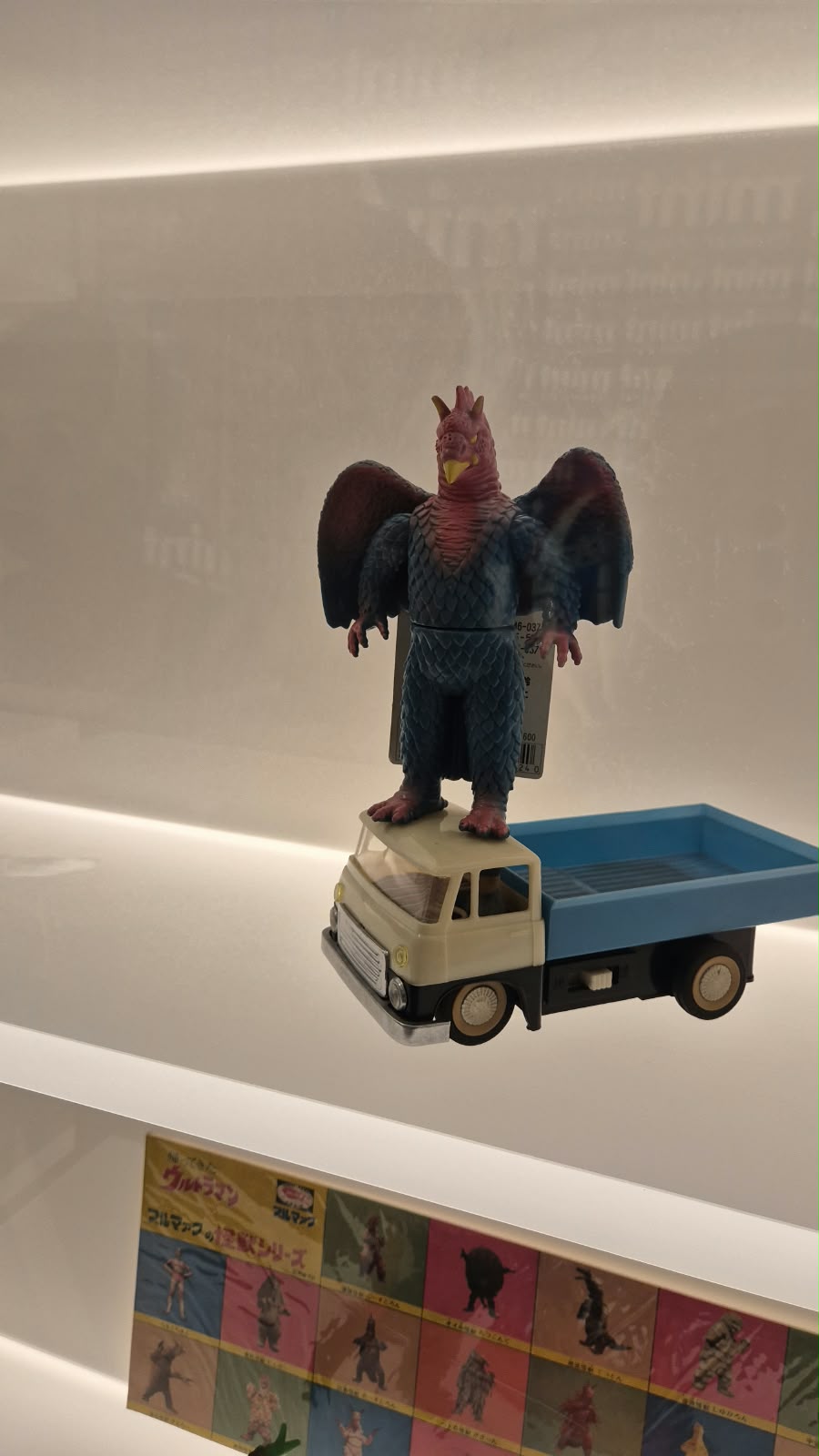
Even longtime fans may come away seeing those episodes differently. Pollution, road safety, abandonment: tokusatsu was handing children these themes long before they were mainstream, dressed up as monsters they would happily watch every week.
Row 3: Golden Era of Heroes
The third row is the Ultra family at its most expansive, alongside the Riders.
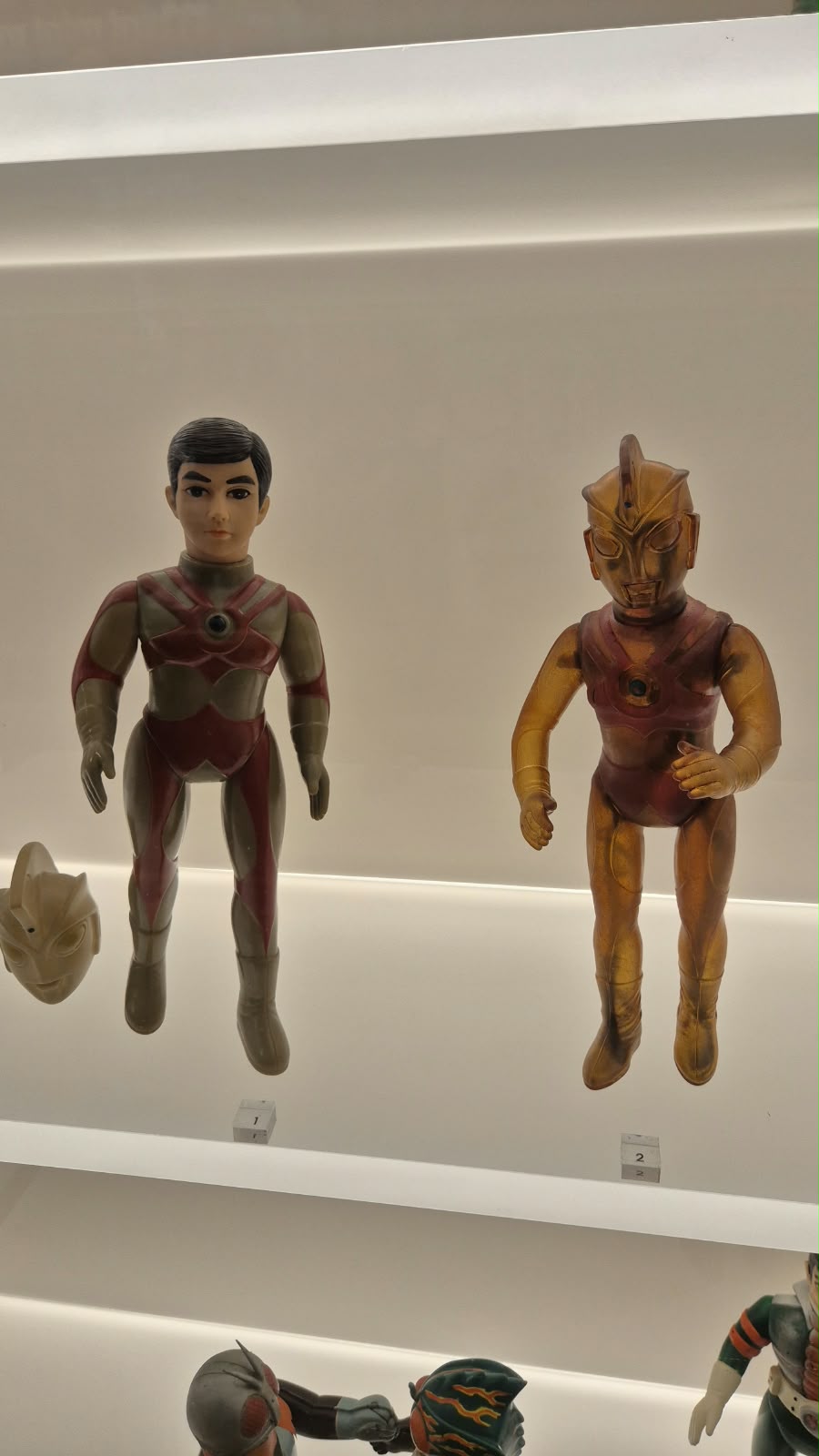
Another Ultraman mask represents a shining legacy. Ultraman Zoffy expands the cosmos. Return of Ultraman brings the human element behind the hero, Ultraman Ace brings duality and extravagance, and the Father of Ultra stands as the patriarchal icon of the Ultra family.
Then there is Kamen Rider: the tragic heroes, fighting the very forces that made them.
Among the standouts is the Return of Ultraman shelf, titled “The Human Element”. It pairs Bullmark vinyl figures from the early 1970s of Ultraman Jack and his human host, Hideki Go, the young racing driver whose struggles the series cared about most. As the shelf’s label puts it, this Ultraman “didn’t simply swoop in to rescue humanity”. He fought alongside the defence team MAT, sharing their doubts, losses and victories. Bullmark’s soft vinyl figures defined how a generation of children held these heroes, and there are many more of them here.
Row 4: Vehicular Designs
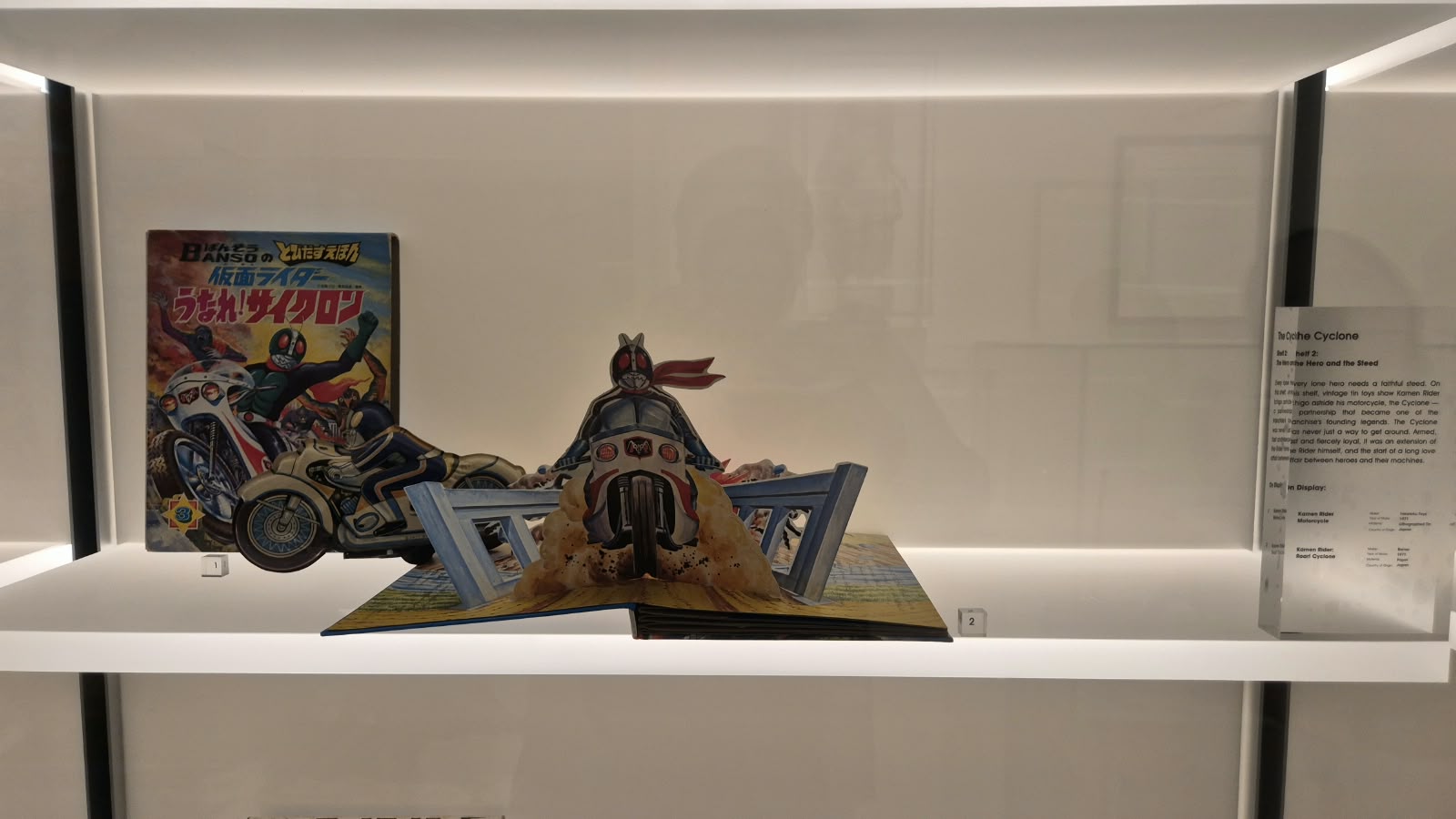
Vehicles get a row of their own, which is a welcome choice. They are easy to overlook in a genre dominated by suits and monsters, and they are some of the most beautiful toys tokusatsu ever produced.
The row opens with a Kamen Rider X mask, then the Cyclone, the hero and his steed, and a run of Rider Machines showing how the Rider bike evolved. The Ultra side brings the Jet VTOL defending the skies, Ultraman Leo’s Maccy 3, built for escalating battles, and Ultraman Taro’s Super Swallow, futuristic design made toy friendly. For fans of mecha and vehicle design, this is the row to linger in.
Row 5: Beyond the Mainstream
The last row is for the hardcore. Ambassador Magma, a manga legend entering the fray. Triple Fighter and the power of combination. Denjin Zaborger, the mechanical partner. Mirrorman, reflections of a hero.
These are names that rarely get the spotlight outside Japan, and seeing them on display in Singapore is a genuine treat. Fittingly, the row also brings the walk back to giant monsters with Gamera, Godzilla’s tried and true rival.
Fans on the shelves
And then there is the part that gives the exhibition its name.
Not everything on these shelves comes from the museum. Part of The People’s Tokusatsu belongs to the fans. MINT has turned its shelves into a collaborative space, and a dedicated fan collection of henshin devices, sofubi and entirely custom creations, owned and made by fans, collectors and creators, stands directly alongside the museum’s historical artefacts.
They get exactly the same treatment as the vintage Showa pieces around them. In MINT’s words, the exhibition “elevates fan creations to museum status”, and walking past them, you would not know where the museum’s collection ends and the community’s begins. The fans are not just the audience here. They are part of the show.
It is the exhibition’s opening line made physical. If the heart of tokusatsu has always belonged to its audience, this is the shelf where the audience gets to prove it.
Also coming to the museum
Two related programmes are listed as coming soon, so there may be reasons to go back.
The first is a 3D Kamen Rider painting workshop, where visitors paint a 3D printed Kamen Rider finger puppet based on one of the museum’s own 1970s collectibles.
The second is MINT Lumens Season 3, Kaiju Collisions & Rider Visions, billed as the grand finale of the museum’s screening programme, which pairs films with guided toy tours. After Season 2: Heroes for Tomorrow, this one leans into Showa kaiju and Rider cinema, with Mothra vs. Godzilla (1964), Godzilla vs. Hedorah (1971), Godzilla vs. Megalon (1973) and Kamen Rider J (1994). It is a well-timed season for kaiju, landing as Godzilla Minus Zero reaches Singapore cinemas. Dates are still to be announced.
Why it is worth a visit
The People’s Tokusatsu does not just show toys. It tells the story of how tokusatsu grew from monster movies into heroes with a conscience, tackling pollution, road safety and abandonment long before those themes were mainstream.
It puts rare Showa era pieces within arm’s reach. It tells the whole story in one walk, from Godzilla sparking the boom to the cult favourites. It gives deep cuts like Ambassador Magma and Denjin Zaborger a rare spotlight, lets vehicles shine, and treats Sonorama records and Bullmark posters as history in their own right, which matters to collectors as much as the shows themselves.
And it puts the community on the shelves. It is a rare chance in Singapore to see vintage tokusatsu history in person, learn the stories behind the suits and monsters, and see fans’ own pieces standing beside them.
Visiting
The People’s Tokusatsu is now open at MINT Museum of Toys, and it is included in the museum’s general admission, so there is no separate ticket to buy. General admission tickets are available on MINT’s ticketing site. The museum is open from 9.30am to 6.30pm, Tuesday to Sunday, and closed on Mondays. For the MINT Lumens schedule, check MINT’s official channels below.
Official sources
- MINT Museum of Toys official site
- POP-UP In The Museum: The People’s Tokusatsu
- MINT Museum of Toys general admission tickets
- MINT Lumens
- MINT Museum of Toys on Instagram
- MINT Museum of Toys on Facebook
- MINT Museum of Toys on X
For admission details and MINT Lumens dates, follow MINT Museum of Toys through its official channels above, and follow @tokuasia.sg on Instagram for more tokusatsu events in Singapore.
This article is written with assistance from Claude.
Previous Next